
A roof is one of the most important parts of a home because it protects the structure and everything inside it from rain, wind, sunlight, snow, hail, and other environmental conditions. However, no roof lasts forever. The lifespan of a roof depends on several factors, including the type of roofing material, installation quality, climate, maintenance, ventilation, roof design, and exposure to severe weather.
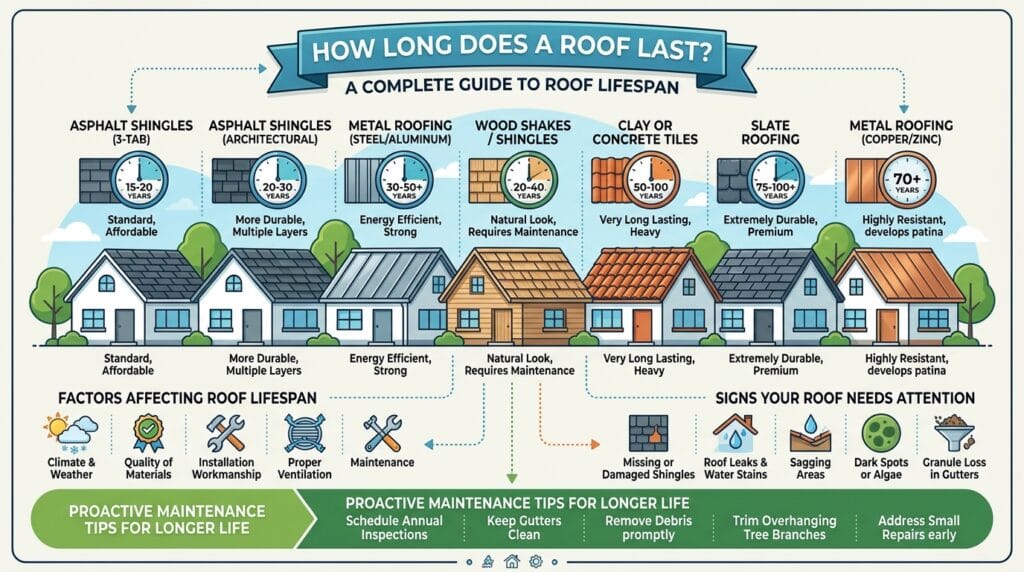
So, how long does a roof last? The answer can range from around 15 years for some basic asphalt shingles to more than 100 years for certain slate roofing systems. Many residential roofs fall somewhere between these extremes. Understanding the expected lifespan of different roofing materials can help homeowners plan for maintenance, repairs, and eventual roof replacement.
It is also important to understand that a roof’s expected lifespan is not a guarantee. A roof that is properly installed and maintained may last longer than its typical service life, while a roof exposed to severe weather, poor ventilation, or improper installation may need replacement much sooner.
How Long Does a Roof Last?
The average lifespan of a roof depends primarily on the roofing material. Asphalt shingles are among the most common residential roofing materials and generally have a shorter lifespan than metal, tile, or slate roofing.
Basic 3-tab asphalt shingles may last approximately 15 to 20 years under normal conditions. Architectural asphalt shingles can commonly last around 25 to 30 years or longer depending on the product and environment. Metal roofing can often last 40 to 70 years or more, while clay and concrete tile roofs can potentially last several decades. Natural slate is one of the longest-lasting roofing materials and can remain functional for 75 to 100 years or considerably longer when properly installed and maintained.
However, material alone does not determine roof longevity. Two roofs made from the same material can have very different lifespans because of differences in installation, ventilation, weather exposure, maintenance, and roof design.
Average Roof Lifespan by Material
| Roofing Material | Typical Lifespan |
|---|---|
| 3-Tab Asphalt Shingles | 15–20 years |
| Architectural Asphalt Shingles | 25–30+ years |
| Premium/Luxury Shingles | 25–40+ years |
| Metal Roofing | 40–70+ years |
| Wood Shingles | 20–40 years |
| Wood Shakes | 20–40 years |
| Concrete Tile | 40–75+ years |
| Clay Tile | 50–100+ years |
| Synthetic/Composite Roofing | 30–50+ years |
| Natural Slate | 75–100+ years |
These figures are general estimates rather than guarantees. Product specifications, installation practices, regional climate, maintenance, and severe weather can all affect actual roof performance.
How Long Do Asphalt Shingles Last?
Asphalt shingles are one of the most popular roofing materials for residential properties because they are relatively affordable, widely available, and offered in many styles and colors. However, asphalt shingles are not all manufactured to the same specifications. Their expected lifespan depends on the type and quality of the shingles.
Basic asphalt shingles generally have a shorter service life than premium roofing products. Proper installation and ventilation are particularly important because excessive heat and moisture in the attic can contribute to premature deterioration.
How Long Do 3-Tab Shingles Last?
Three-tab asphalt shingles typically have an expected lifespan of approximately 15 to 20 years under favorable conditions. They are made with a relatively simple design and are generally less expensive than architectural shingles.
Their lifespan can be reduced by strong winds, hail, excessive sunlight, poor attic ventilation, improper installation, and inadequate maintenance. Homeowners with older 3-tab shingles should regularly look for signs such as curling, cracking, missing shingles, and excessive granule loss.
How Long Do Architectural Shingles Last?
Architectural shingles, also called dimensional or laminated shingles, generally last longer than basic 3-tab shingles. Many architectural shingles are designed to provide approximately 25 to 30 years or more of service, depending on the specific product and environmental conditions.
They are constructed with multiple layers and have a dimensional appearance that can resemble more expensive roofing materials. Their enhanced construction can provide improved durability and resistance to certain weather conditions.
However, architectural shingles still require proper installation and maintenance. A high-quality shingle installed incorrectly can experience problems long before the material’s expected lifespan.
How Long Do Premium or Luxury Shingles Last?
Premium or luxury asphalt shingles are designed to provide enhanced appearance, durability, and weather resistance compared with standard asphalt products. Depending on the product, these shingles may have an expected service life of 25 to 40 years or more.
They are often designed to imitate the appearance of slate, wood shakes, or other premium roofing materials. Although they typically cost more than standard shingles, their appearance and durability may make them attractive to homeowners looking for a higher-end asphalt roofing system.
How Long Does a Metal Roof Last?
Metal roofing is known for its durability and long service life. Depending on the material, coating, installation method, and environment, a properly installed metal roof can last approximately 40 to 70 years or longer.
Common metal roofing materials include steel, aluminum, zinc, and copper. Steel roofing is widely used because it offers a combination of durability and relatively reasonable cost. Aluminum can be useful in environments where corrosion resistance is important, while copper and zinc can provide exceptionally long service lives.
Metal roofs also require appropriate installation. Fasteners, seams, flashing, coatings, and penetrations must be properly installed and maintained. Poor installation can cause leaks and other problems even when the roofing material itself is highly durable.
How Long Does a Standing Seam Metal Roof Last?
Standing seam metal roofing is a popular metal roofing system because the fasteners are generally concealed beneath raised seams. This design can reduce exposure of certain fastening components to weather.
A properly installed standing seam metal roof can potentially last 40 to 70 years or longer. Its actual lifespan depends on the metal used, coating, installation quality, climate, maintenance, and exposure to severe weather.
How Long Does a Corrugated Metal Roof Last?
Corrugated and exposed-fastener metal roofing systems can also provide decades of service. However, exposed fasteners and penetrations require regular attention because seals and fasteners can deteriorate over time.
Regular inspections can help identify loose fasteners, corrosion, damaged coatings, and deteriorated sealants before they lead to larger problems.
How Long Do Tile Roofs Last?
Tile roofing is known for its durability and long service life. Both clay and concrete tiles can potentially remain functional for several decades when properly installed and maintained.
One important consideration is that the tiles themselves may outlast some of the components underneath them. Underlayment, flashing, fasteners, and other roofing components may require repair or replacement during the overall life of the tile roof.
How Long Does a Clay Tile Roof Last?
Clay tile roofs can potentially last 50 to 100 years or longer. Clay is naturally resistant to many environmental conditions and does not deteriorate in the same way as organic roofing materials.
However, individual tiles can crack or break from impacts, improper foot traffic, or severe weather. A damaged tile should be addressed promptly because water can eventually reach the underlying roofing system.
How Long Does a Concrete Tile Roof Last?
Concrete tile roofing can often last 40 to 75 years or longer depending on the product, installation, climate, and maintenance.
Concrete tiles are durable but relatively heavy. The structure of the home must be capable of supporting the roofing system. Like clay tiles, concrete tiles can crack under certain conditions, so regular inspections are important.
How Long Does a Slate Roof Last?
Natural slate is one of the longest-lasting roofing materials available. A properly installed natural slate roof can potentially last 75 to 100 years or considerably longer.
The longevity of slate depends heavily on the quality of the slate itself and the expertise of the installer. Slate is a specialized material, and repairs or installation should generally be performed by professionals familiar with slate roofing.
The underlying components, such as flashing and underlayment, may need attention before the slate itself reaches the end of its useful life. This means homeowners should inspect the entire roofing system rather than assuming that a long-lasting roofing material requires no maintenance.
How Long Do Wood Shingles and Shakes Last?
Wood shingles and shakes can provide approximately 20 to 40 years of service when properly maintained, although actual lifespan varies considerably depending on the wood species, climate, installation, and maintenance.
Wood roofing is particularly sensitive to moisture. Poor ventilation, excessive shade, persistent dampness, moss, and debris can accelerate deterioration. Insects and fungal decay can also affect some wood roofing systems.
Wood shakes are generally thicker and more textured than wood shingles, which can provide a distinctive appearance. However, both materials require more maintenance than many modern synthetic roofing products.
How Long Does a Flat Roof Last?
Flat and low-slope roofs use different materials than many traditional pitched residential roofs. Common systems include EPDM, TPO, PVC, modified bitumen, and built-up roofing.
The lifespan of a flat roof can vary significantly depending on the membrane, installation quality, drainage, UV exposure, maintenance, and weather conditions.
EPDM Roofing
EPDM is a synthetic rubber roofing membrane commonly used on low-slope and commercial buildings. A properly installed and maintained EPDM system can provide decades of service.
TPO Roofing
TPO is a single-ply membrane designed to provide resistance to UV exposure and weather conditions. Its lifespan depends on membrane quality, installation, seam integrity, and maintenance.
PVC Roofing
PVC roofing membranes can provide long-term performance when properly installed. They are commonly used in commercial and low-slope roofing applications.
Modified Bitumen Roofing
Modified bitumen systems are designed for low-slope roofs and can provide many years of service when properly installed and maintained.
Built-Up Roofing
Built-up roofing consists of multiple layers designed to create a durable waterproofing system. Its lifespan depends on the materials, installation, drainage, and maintenance.
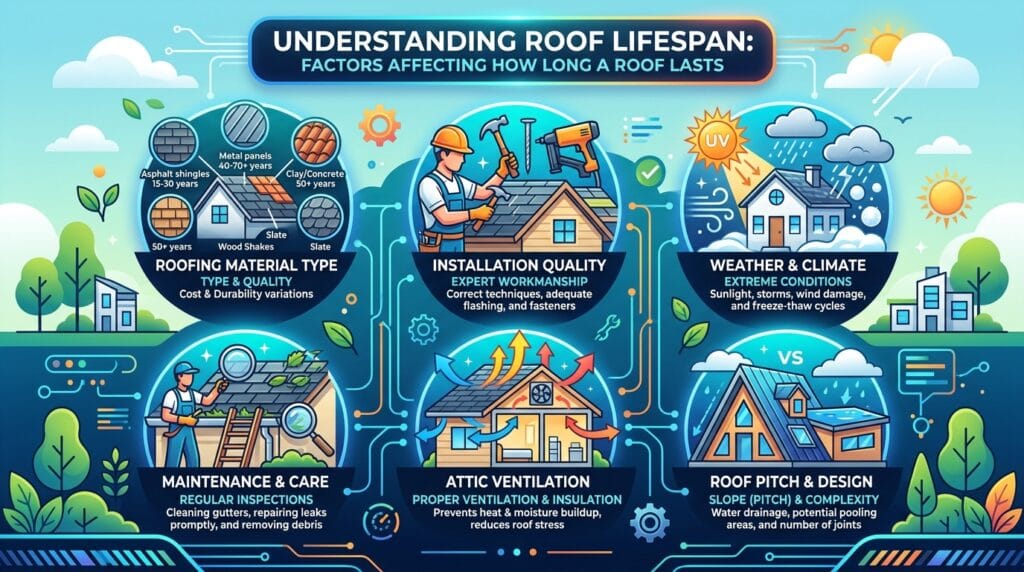
What Factors Affect How Long a Roof Lasts?
The roofing material is only one part of the equation. Several other factors can determine whether a roof reaches, exceeds, or falls short of its expected lifespan.
Roofing Material Quality
Not all roofing products are equal. Manufacturers produce roofing materials in different grades and product lines, each with different performance characteristics.
Homeowners should consider product specifications, installation requirements, warranties, and expected service life when selecting roofing materials.
Installation Quality
Installation quality is one of the most important factors affecting roof longevity. Even premium roofing materials can fail prematurely if they are installed incorrectly.
Problems with fastening, flashing, underlayment, ventilation, roof penetrations, or drainage can create conditions that lead to leaks and premature deterioration.
Hiring a qualified roofing contractor is therefore an important part of protecting the investment in a new roof.
Climate and Weather
Climate has a significant effect on roofing materials. Roofs exposed to intense sunlight, extreme heat, heavy rain, snow, ice, hail, or high winds may deteriorate more quickly than roofs in milder environments.
Repeated exposure to severe weather can cause physical damage even when a roof is relatively new.
Roof Ventilation
Proper attic ventilation helps regulate temperature and moisture levels beneath the roof. Poor ventilation can allow excessive heat and moisture to accumulate, which may contribute to deterioration of roofing materials and other components.
Adequate ventilation should be considered as part of the overall roofing system rather than as an optional feature.
Roof Pitch
Roof pitch affects how quickly water drains from the roofing surface and how much debris or snow may accumulate.
Low-slope roofs require roofing systems specifically designed for their drainage characteristics. A roofing material that performs well on a steeply pitched roof may not be appropriate for every low-slope application.
Maintenance
Regular maintenance can help extend a roof’s useful life. Inspections, gutter cleaning, debris removal, flashing checks, and prompt repairs can prevent small problems from developing into major damage.
Maintenance cannot make an old roof last forever, but it can help identify problems earlier and potentially reduce unnecessary damage.
Tree Exposure
Trees can provide shade but can also create roofing problems. Overhanging branches may scratch or damage roofing materials, while falling branches can cause significant impact damage.
Leaves and organic debris can also accumulate on the roof and in gutters, potentially retaining moisture and interfering with drainage.
How Does Climate Affect Roof Lifespan?
Roof Lifespan in Hot Climates
Hot climates expose roofing materials to intense ultraviolet radiation and repeated temperature changes. Materials can expand and contract as temperatures change, while prolonged sunlight can accelerate aging.
Proper ventilation and choosing roofing materials appropriate for the local climate can help improve long-term performance.
Roof Lifespan in Cold Climates
Cold climates can expose roofs to snow, ice, freezing temperatures, and repeated freeze-thaw cycles. Ice accumulation and poor drainage can increase the risk of moisture intrusion.
Proper insulation, ventilation, flashing, and drainage are important components of a roof system in cold environments.
Roof Lifespan in Wet Climates
Frequent rainfall increases the importance of proper drainage and waterproofing. Persistent moisture can contribute to algae, moss, wood deterioration, and damage to underlying roofing components.
Regular inspections can help identify areas where water may be accumulating or entering the roofing system.
Roof Lifespan in High-Wind Areas
High winds can lift or remove shingles, damage flashing, and expose areas of the roof to water. Roofing systems installed in areas with frequent high winds should be selected and installed according to applicable requirements.
After a major wind event, homeowners should consider having the roof professionally inspected for hidden damage.
Roof Lifespan in Hail-Prone Areas
Hail can damage shingles and other roofing materials through direct impact. Damage may include cracked or bruised shingles, granule loss, and other signs that are not always visible from the ground.
A professional inspection after significant hail exposure can help determine whether repairs or replacement are necessary.
How Can You Make Your Roof Last Longer?
Regular maintenance is one of the best ways to protect your roof investment.
Schedule Regular Roof Inspections
Professional roof inspections can identify damaged shingles, deteriorated flashing, leaks, ventilation problems, and other issues before they become more expensive.
Homeowners should also consider inspections after severe weather.
Clean and Maintain Gutters
Gutters and downspouts help move water away from the roof and foundation. When gutters become clogged, water can back up and potentially contribute to moisture problems around the roof edge.
Keeping gutters clear helps maintain proper drainage.
Remove Leaves and Debris
Leaves, branches, and other debris can trap moisture against roofing materials. Removing debris can help reduce moisture exposure and make it easier to identify damaged areas.
Trim Overhanging Tree Branches
Regularly trimming branches near the roof can reduce the risk of impact damage and limit the accumulation of leaves and debris.
Maintain Proper Attic Ventilation
Proper attic ventilation can help control heat and moisture levels. If you notice excessive attic heat, condensation, or moisture problems, have the ventilation system evaluated by a qualified professional.
Repair Damage Quickly
Small roofing problems can become much more expensive if ignored. A missing shingle, damaged flashing component, or small leak can eventually allow water to reach the roof deck, insulation, walls, or ceilings.
Addressing problems early can help protect the rest of the roofing system.
What Are the Signs Your Roof Is Nearing the End of Its Life?
Several visible signs may indicate that a roof is approaching the end of its useful service life.
Curling or Buckling Shingles
Shingles that curl, buckle, or lose their original shape may indicate aging or other roofing problems. Widespread curling is more concerning than a single damaged shingle.
Cracked Shingles
Cracking can occur as roofing materials age or experience repeated environmental exposure. Widespread cracking may indicate that replacement should be considered.
Missing Shingles
Missing shingles expose the underlying roofing system to weather. Individual missing shingles may sometimes be replaced, but widespread loss can indicate a larger problem.
Excessive Granule Loss
Asphalt shingles contain protective granules that help shield the material from sunlight and weather. Excessive granule loss can indicate deterioration.
Bald Spots
Areas where shingles have lost substantial amounts of granules can become more vulnerable to UV exposure and weathering.
Sagging Roof Areas
A sagging roof can indicate a potentially serious structural or moisture-related problem. Homeowners should have significant sagging evaluated promptly by a qualified professional.
Frequent Roof Leaks
A single localized leak does not automatically mean the entire roof needs replacement. However, repeated leaks across different areas may indicate that the roof is nearing the end of its useful life.
Damaged Flashing
Flashing protects vulnerable areas around chimneys, skylights, vents, walls, and other roof penetrations. Damaged or deteriorated flashing can allow water to enter the structure.
Moss or Algae
Moss and algae can retain moisture and affect certain roofing materials. Their presence does not automatically mean a roof needs replacement, but persistent growth should be addressed appropriately.
Daylight Visible Through the Roof
If daylight is visible through areas of the roof or attic, it may indicate holes, gaps, or other problems that require professional evaluation.
Aging Roof
Age alone does not determine whether a roof needs replacement, but an older roof should be monitored more carefully, especially when combined with visible deterioration or repeated repairs.
How Do You Know How Old Your Roof Is?
Knowing your roof’s age can help you plan maintenance and replacement. If you recently purchased your home, check your closing documents or property records for information about previous roofing work.
Previous owners may also have roofing invoices or warranty documentation. Building permits may provide additional information depending on local requirements.
If documentation is unavailable, a roofing professional may be able to estimate the approximate age based on the condition and type of roofing material. However, visual inspection cannot always determine an exact installation date.
Should You Repair or Replace an Aging Roof?
Not every damaged roof needs to be completely replaced. A localized problem may be repairable, particularly when the rest of the roofing system is in good condition.
Roof repair may make sense when the damage is limited to a small area, such as a few missing shingles, localized flashing damage, or a minor leak.
Replacement may become more practical when the roof has widespread deterioration, repeated leaks, extensive storm damage, structural problems, or is approaching the end of its expected service life.
The decision should consider the condition of the entire roofing system, expected remaining lifespan, repair costs, and the long-term goals of the homeowner.
Does a Roof Need to Be Replaced After Its Expected Lifespan?
Not necessarily. Reaching the expected lifespan of a roofing material does not automatically mean that replacement is required.
For example, an asphalt roof that reaches its expected service life may still have usable life remaining if it is in good condition. Conversely, a roof that is significantly younger than its expected lifespan may need replacement if it suffered severe storm damage or was improperly installed.
The roof’s actual condition should be evaluated alongside its age.
How Long Does a Roof Last After a Roof Replacement?
A newly replaced roof should provide many years of protection, but its actual lifespan depends on the roofing material, installation quality, maintenance, climate, and exposure to severe weather.
A new asphalt shingle roof may provide several decades of service depending on the product. Metal, tile, and slate systems can potentially provide significantly longer service lives.
Homeowners should not assume that a new roof requires no maintenance. Regular inspections and prompt repairs remain important throughout the roof’s life.
Roof Lifespan vs. Roofing Warranty
Roof lifespan and roofing warranty are not the same thing.
A manufacturer material warranty generally covers certain defects or issues associated with the roofing product, subject to the specific warranty terms.
A workmanship warranty is provided by the contractor and generally addresses certain installation-related problems.
The expected lifespan is an estimate of how long a roofing system may reasonably perform under particular conditions.
A roof warranty does not necessarily mean that the roof will remain in perfect condition for the exact number of years stated in marketing materials. Homeowners should carefully review the warranty terms and understand exclusions, maintenance requirements, and other conditions.
How Often Should You Have Your Roof Inspected?
Regular roof inspections can help identify problems before they become expensive repairs. Many homeowners benefit from periodic inspections, particularly as the roof becomes older.
An inspection is also especially useful after severe weather events such as major windstorms or hailstorms.
You should also consider a professional inspection if you notice water stains, missing shingles, damaged flashing, sagging areas, or other signs of roof deterioration.
Can Roof Maintenance Extend Its Lifespan?
Proper maintenance can help a roof reach or potentially exceed its expected useful life. Maintenance allows homeowners to identify small problems before they develop into extensive damage.
Regular inspections, gutter maintenance, debris removal, tree trimming, ventilation checks, and prompt repairs can all contribute to better roof performance.
However, maintenance cannot eliminate normal aging. Eventually, roofing materials deteriorate and need to be replaced.
How Long Does a Roof Last in Different Conditions?
The conditions surrounding a roof can have a major effect on its service life.
| Condition | Potential Impact on Roof |
|---|---|
| Proper Maintenance | Can help extend useful service life |
| Poor Ventilation | May accelerate deterioration |
| Heavy Hail | Can cause impact damage |
| High Winds | Can damage shingles and flashing |
| Excessive Sun | Can accelerate material aging |
| Heavy Snow | Adds weight and moisture exposure |
| Standing Water | Can contribute to premature deterioration |
| Overhanging Trees | Increases debris and impact risk |
| Poor Installation | Can significantly reduce service life |
These conditions demonstrate why two roofs made from identical materials may not last the same amount of time.
Frequently Asked Questions About Roof Lifespan
How many years does a roof usually last?
Roof lifespan varies by material. Basic asphalt shingles may last around 15 to 20 years, architectural shingles around 25 to 30 years or more, metal roofing approximately 40 to 70 years or longer, and slate can potentially last 75 to 100 years or more.
What type of roof lasts the longest?
Natural slate is among the longest-lasting roofing materials and can potentially remain functional for many decades or more than a century when properly installed and maintained. Certain clay tile, metal, and other premium roofing systems can also provide very long service lives.
How long do asphalt shingles last?
The lifespan depends on the type of asphalt shingle. Basic 3-tab shingles may last approximately 15 to 20 years, while architectural and premium products can last considerably longer.
How long do architectural shingles last?
Many architectural shingles are designed to provide approximately 25 to 30 years or more of service, although actual performance depends on the product, installation, maintenance, and environment.
How long does a metal roof last?
A properly installed metal roof can often last approximately 40 to 70 years or longer. The specific metal, coating, installation, climate, and maintenance all influence its lifespan.
How long does a tile roof last?
Clay tile roofs can potentially last 50 to 100 years or longer, while concrete tile roofs can often provide 40 to 75 years or more under suitable conditions.
How long does a slate roof last?
Natural slate is exceptionally durable and can potentially last 75 to 100 years or significantly longer when high-quality slate and proper installation are used.
How long does a flat roof last?
Flat roof lifespan varies by the roofing system. EPDM, TPO, PVC, modified bitumen, and built-up roofing systems can all provide decades of service when properly installed and maintained.
How often should a roof be replaced?
There is no universal replacement schedule. Roof replacement depends on the material, age, condition, weather exposure, maintenance history, and extent of damage.
Can a roof last 30 years?
Yes. Many architectural asphalt shingles, premium roofing products, and several other roofing systems can provide approximately 30 years or more of service when properly installed and maintained.
Can an asphalt roof last 30 years?
Some higher-quality architectural and premium asphalt shingles can potentially reach or exceed 30 years under favorable conditions. Basic 3-tab shingles generally have shorter expected service lives.
Can a roof last 50 years?
Yes. Metal, tile, slate, and certain premium roofing systems can potentially last 50 years or longer. The material, installation, climate, and maintenance all matter.
What makes a roof wear out faster?
Poor installation, inadequate ventilation, severe weather, excessive sunlight, moisture, standing water, tree damage, lack of maintenance, and repeated storm exposure can all contribute to premature roof deterioration.
How can I make my roof last longer?
Schedule regular inspections, maintain gutters, remove debris, trim nearby branches, maintain proper ventilation, repair damage promptly, and use qualified roofing professionals for repairs and maintenance.
Does roof maintenance extend its lifespan?
Proper maintenance can help extend the useful life of a roof by identifying and addressing problems before they cause widespread damage. However, maintenance cannot prevent normal aging indefinitely.
Should I replace my roof after 20 years?
Not automatically. The condition of the roof is more important than age alone. A 20-year-old roof in excellent condition may have useful life remaining, while a newer roof with extensive damage may require replacement.
How do I know when my roof needs replacement?
Signs can include widespread curling or cracking shingles, excessive granule loss, frequent leaks, missing roofing materials, sagging, extensive storm damage, and deterioration throughout the roofing system. A professional inspection can help determine whether repair or replacement is appropriate.
Final Thoughts: How Long Does a Roof Last?
So, how long does a roof last? There is no single answer because roof lifespan depends on the material, installation, climate, maintenance, ventilation, roof design, and exposure to severe weather.
Basic asphalt shingles may last around 15 to 20 years, while architectural shingles can often provide 25 to 30 years or more. Metal roofing can last 40 to 70 years or longer, tile can provide several decades of service, and natural slate can potentially last a century or more.
The most important thing homeowners can do is not wait until a major leak occurs. Regular inspections and maintenance can identify problems early, while timely repairs can help protect the rest of the roofing system.
If your roof is aging, showing visible damage, or experiencing repeated leaks, consider having it evaluated by a qualified roofing professional. A detailed inspection can help you understand the roof’s current condition, remaining useful life, and whether repair or replacement is the most practical option.
Our Construction & Remodeling Services in Houston, TX
Looking for professional construction, roofing, or remodeling services in Houston, Texas? Abbott & Crane provides a range of residential and commercial services designed to improve, protect, and add value to your property.
- Commercial Roofing Services – Professional roofing solutions for commercial properties throughout Houston.
- Home Remodeling & Additions – Expand and improve your Houston home with professional remodeling and addition services.
- Siding Replacement & Installation – Upgrade your home’s exterior with durable siding installation and replacement.
- New Construction – Complete construction solutions for new residential and commercial projects.
- Kitchen Remodeling – Create a more functional and attractive kitchen with professional remodeling services.
- Window Installation & Replacement – Improve your home’s comfort, appearance, and energy efficiency with new windows.
- Interior Remodeling – Transform interior spaces with customized remodeling solutions.
- Bathroom Remodeling – Upgrade your bathroom with professional design and remodeling services.