
Architectural roofing is one of the most popular choices for homeowners looking for a durable, attractive, and relatively cost-effective roofing solution. The term architectural roofing most commonly refers to architectural asphalt shingles, which are also called dimensional shingles or laminated shingles. Unlike traditional three-tab shingles, architectural shingles are made with multiple layers that create a thicker, more dimensional appearance.
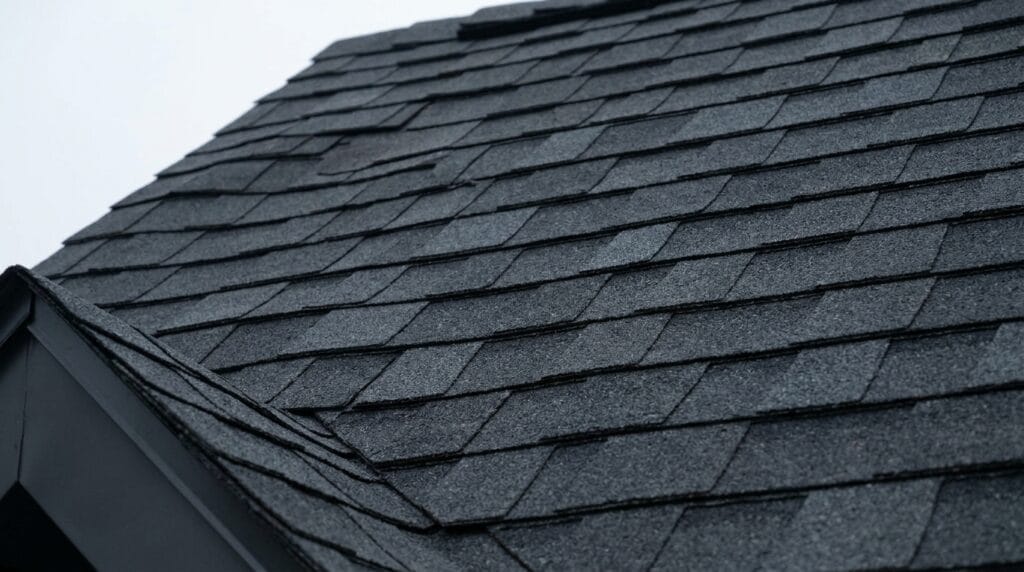
Architectural shingles have become increasingly popular because they offer a combination of appearance, durability, weather resistance, and value. They can also be manufactured in many different colors and profiles, allowing homeowners to create the appearance of more expensive roofing materials such as slate or wood shakes without necessarily paying the same price.
However, architectural roofing is more than simply choosing a particular type of shingle. The performance and lifespan of a roof depend on the entire roofing system, including the roof deck, underlayment, flashing, ventilation, shingles, and installation quality. Understanding how architectural shingles work, their advantages and disadvantages, maintenance requirements, and expected lifespan can help you decide whether they are right for your property.
What Is Architectural Roofing?
Architectural roofing generally refers to a roofing system that uses architectural asphalt shingles. These shingles are designed with multiple laminated layers that give them a three-dimensional or textured appearance.
Traditional three-tab shingles have a relatively flat and uniform appearance. Architectural shingles, by comparison, contain additional material and are manufactured with varying shapes and thicknesses. This creates shadows and depth across the roof, giving the property a more premium appearance.
Architectural shingles are made primarily from a fiberglass reinforcement mat that is coated with asphalt. Mineral granules are embedded into the surface to provide color and help protect the shingles from ultraviolet radiation and weather exposure. Additional laminated layers are added to create the dimensional profile.
Because of their appearance and performance, architectural shingles are commonly used on single-family homes, townhouses, garages, additions, and other residential structures.
It is also important to understand that architectural roofing is not the same thing as an architectural roof style. A gable roof, hip roof, or mansard roof describes the shape of a roof. Architectural shingles describe the roofing material installed on that roof.
How Are Architectural Shingles Made?
Architectural shingles are manufactured using several layers designed to work together as a roofing product. The fiberglass mat provides structural reinforcement, while asphalt provides waterproofing properties. Mineral granules are applied to the exposed surface and provide color and additional protection.
The laminated construction is what separates architectural shingles from traditional three-tab shingles. Instead of having a relatively uniform single-layer profile, architectural shingles use additional layers to create depth and texture.
The exact construction varies between manufacturers and product lines. Some premium architectural shingles are specifically designed to replicate natural slate, cedar shakes, or other high-end roofing materials.
The quality of the materials and manufacturing process can influence the shingle’s durability, appearance, warranty, wind resistance, impact resistance, and expected service life.
Why Are They Called Architectural Shingles?
The word “architectural” comes largely from the more sophisticated appearance and design of these shingles. Their dimensional profiles allow manufacturers to create patterns that provide more visual depth than basic three-tab shingles.
Architectural shingles can complement many different home designs, including traditional, contemporary, colonial, ranch, craftsman, and modern properties.
Some premium products are specifically designed to mimic the appearance of natural materials. For example, a homeowner may choose architectural shingles that resemble slate or wood shakes while using an asphalt-based roofing product.
This makes architectural shingles appealing to homeowners who want a more distinctive roof without moving to some of the significantly more expensive roofing materials available.
How Do Architectural Shingles Work?
Architectural shingles are one part of a complete roofing system. The shingles provide the primary exterior weather barrier, but several other components work together to protect the structure.
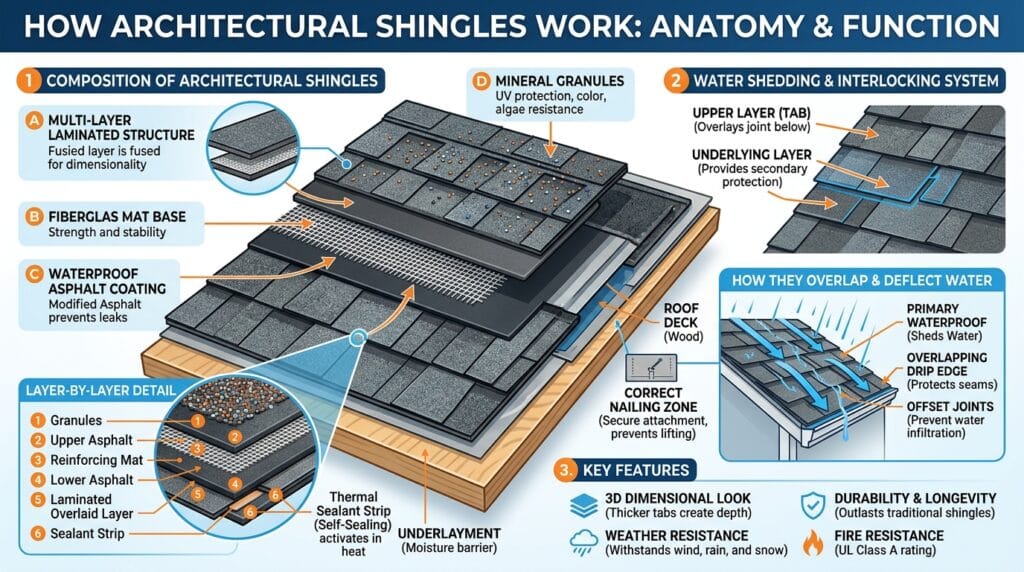
A properly installed architectural roof generally includes the roof deck, underlayment, flashing, shingles, ridge caps, ventilation components, and other accessories.
Roof Deck
The roof deck is the structural surface installed over the roof framing. It is commonly made from plywood or oriented strand board. The deck provides the foundation onto which the rest of the roofing system is installed.
Before installing new shingles, roofing contractors should inspect the deck for signs of rot, moisture damage, deterioration, or structural problems. Damaged decking may need to be repaired or replaced before new roofing materials are installed.
Underlayment
Underlayment is installed between the roof deck and the shingles. It provides an additional layer of protection against moisture and can help prevent water from reaching the roof deck.
Different roofing projects may use different types of underlayment, including asphalt-saturated felt and synthetic products.
Ice and Water Shield
Ice and water protection is commonly installed in vulnerable areas such as roof edges, valleys, eaves, and around certain roof penetrations. The purpose is to provide additional protection against water intrusion in areas where roofing materials are particularly susceptible to leaks.
The specific requirements vary by climate, building codes, roof design, and manufacturer instructions.
Architectural Shingles
The architectural shingles provide the visible exterior roofing surface. Their overlapping installation creates channels that direct water down the roof and toward gutters or other drainage systems.
Proper fastening is extremely important. Shingles that are improperly nailed or installed outside manufacturer specifications may have reduced resistance to wind and weather.
Flashing
Flashing is installed around areas where the roof intersects with walls, chimneys, skylights, vents, and other penetrations.
Because these locations can be vulnerable to water intrusion, properly designed and installed flashing is an essential part of a roofing system.
Ridge Caps
Ridge caps cover the highest points of the roof and provide protection where roof planes meet. They can also be integrated with ridge ventilation systems where appropriate.
Roof Ventilation
Proper ventilation helps manage heat and moisture in the attic. A balanced ventilation system may include intake vents near the eaves and exhaust ventilation near the roof ridge.
Poor ventilation can contribute to moisture accumulation, excessive attic temperatures, and premature deterioration of roofing components.
Architectural Shingles vs. 3-Tab Shingles
Architectural shingles and three-tab shingles are both asphalt-based roofing products, but they differ considerably in construction, appearance, durability, and price.
Three-tab shingles have a relatively flat design and are manufactured with repeating tabs that create a consistent pattern across the roof. Architectural shingles use laminated layers to create a more dimensional appearance.
Architectural shingles are generally thicker and heavier than three-tab shingles. Their additional material can contribute to improved durability and wind resistance, although performance ultimately depends on the specific product and installation.
| Feature | Architectural Shingles | 3-Tab Shingles |
| Appearance | Dimensional and textured | Flat and uniform |
| Construction | Laminated layers | Simpler construction |
| Thickness | Generally thicker | Generally thinner |
| Durability | Generally higher | Moderate |
| Expected lifespan | Often 25–30+ years | Often 15–20 years |
| Wind resistance | Generally higher | Generally lower |
| Cost | Higher | Lower |
| Design options | Extensive | More limited |
The exact lifespan and performance of either product depend on manufacturer specifications, installation quality, climate, maintenance, and exposure to severe weather.
Appearance
One of the most noticeable advantages of architectural shingles is their appearance. The layered design creates shadows and depth that can make a roof look more substantial and visually interesting.
Many architectural shingles are available in blends of multiple colors rather than a single uniform color. This can create an appearance similar to natural slate, wood, or other premium roofing materials.
Durability
Architectural shingles generally contain more material than basic three-tab shingles, which can make them more resistant to certain forms of weather-related wear.
However, thicker shingles do not eliminate the possibility of storm damage. Severe hail, high winds, falling branches, and other extreme conditions can damage any roofing material.
Lifespan
Architectural shingles commonly have a longer expected service life than basic three-tab shingles. Many products are designed to provide approximately 25 to 30 years or more of service under suitable conditions.
Some premium architectural shingles are designed for even longer performance. However, the product’s warranty period should not automatically be interpreted as a guaranteed service life.
What Are the Benefits of Architectural Roofing?
Architectural shingles offer several advantages that make them a popular residential roofing choice.
Enhanced Curb Appeal
The dimensional appearance of architectural shingles can significantly improve the visual appearance of a property. Their textured surface creates shadows and patterns that are generally more sophisticated than basic three-tab shingles.
Homeowners can select from a wide range of colors and profiles to complement siding, brick, stone, trim, windows, and other exterior elements.
Improved Durability
Architectural shingles generally have a thicker construction than basic three-tab shingles. This can provide improved resistance to everyday weather exposure and physical wear.
The actual durability of a roofing product depends on its specifications, installation, climate, maintenance, and exposure to storms.
Longer Expected Lifespan
Architectural shingles generally have a longer expected lifespan than entry-level three-tab shingles. With proper installation and maintenance, many architectural roofing systems can provide decades of service.
Regular inspections and prompt repairs can help prevent small problems from developing into larger roofing failures.
Better Wind Resistance
Many architectural shingle products are manufactured with strong wind-resistance ratings. Some premium products are specifically engineered for areas that experience significant wind exposure.
However, wind resistance depends on more than the shingle itself. Proper fastening, roof design, underlayment, and installation methods are also important.
More Design Options
Architectural shingles are available in numerous colors, patterns, textures, and profiles. This makes them suitable for a wide variety of architectural styles.
Homeowners can choose products that create a traditional asphalt appearance or products designed to resemble slate, cedar, or other premium roofing materials.
Good Balance Between Cost and Performance
Architectural shingles often occupy a middle ground between basic asphalt shingles and premium roofing materials such as natural slate, copper, and high-end tile.
They can provide improved appearance and durability without requiring the same initial investment as some premium roofing systems.
What Are the Disadvantages of Architectural Shingles?
Although architectural shingles have many advantages, they are not perfect for every property or situation.
Higher Initial Cost
Architectural shingles generally cost more than basic three-tab shingles because they use more material and have a more complex construction.
However, the additional upfront cost may be justified for homeowners who prioritize appearance, durability, and longer expected service life.
Heavier Weight
Because architectural shingles contain additional material, they are generally heavier than three-tab shingles.
Most residential structures designed for asphalt shingles can accommodate architectural shingles, but structural considerations should still be evaluated when necessary, especially during major roof renovations.
Installation Quality Matters
Even high-quality shingles can perform poorly if they are improperly installed.
Problems such as incorrect nail placement, inadequate flashing, poor ventilation, insufficient fastening, and improper underlayment installation can reduce the performance and lifespan of the roof.
Not as Long-Lasting as Some Premium Materials
Architectural shingles can last for decades, but materials such as natural slate, certain metal systems, and high-quality tile can potentially provide significantly longer service lives.
For homeowners planning to remain in a property for many decades, comparing the lifetime cost of different materials may be worthwhile.
Repairs May Be Noticeable
Replacing individual shingles on an older roof can sometimes result in visible color differences. New shingles may not perfectly match older shingles because the existing roof has been exposed to sunlight and weather for years.
How Long Do Architectural Shingles Last?
Architectural shingles commonly have an expected lifespan of approximately 25 to 30 years or more, depending on the specific product and environmental conditions.
Premium architectural shingles may be designed for longer service. However, homeowners should understand that the actual lifespan of a roof can vary substantially.
Several factors influence how long architectural shingles last.
Installation Quality
Proper installation is one of the most important factors affecting roofing performance. Correct fastening, flashing, underlayment, ventilation, and shingle placement all contribute to the overall durability of the system.
Weather Conditions
High winds, hail, heavy rain, snow, ice, and extreme temperature changes can accelerate roofing deterioration.
A roof exposed to frequent severe storms may have a shorter service life than a similar roof installed in a more moderate environment.
Roof Ventilation
Proper attic ventilation can help control heat and moisture. Excessive heat and moisture can contribute to deterioration of roofing materials and other components of the building.
Roof Slope
Roof pitch affects how quickly water drains from the roof. Properly designed slopes help prevent prolonged water exposure and drainage problems.
Maintenance
Regular inspections can identify damaged shingles, deteriorated flashing, clogged gutters, moss growth, and other issues before they become more serious.
Material Quality
Not all architectural shingles are identical. Products vary in thickness, construction, wind ratings, warranties, impact resistance, and expected service life.
How Much Does Architectural Roofing Cost?
The cost of an architectural roofing project depends on numerous factors, so there is no universal price that applies to every property.
The size and complexity of the roof are two of the most important considerations. A large roof requires more materials and labor, while a roof with multiple valleys, dormers, skylights, chimneys, or steep slopes generally requires more installation time.
Other cost factors can include:
- Roofing material
- Labor
- Geographic location
- Roof size
- Roof pitch
- Tear-off
- Number of existing roofing layers
- Underlayment
- Ice and water protection
- Flashing
- Ventilation
- Drip edge
- Ridge caps
- Roof deck repairs
- Skylights and chimneys
- Accessibility
- Waste disposal
Architectural Shingles Cost vs. 3-Tab Shingles
Architectural shingles generally have a higher upfront cost than three-tab shingles. However, comparing only the initial price does not provide a complete picture.
Homeowners should also consider expected lifespan, maintenance, appearance, warranty, weather resistance, and potential replacement frequency.
A slightly more expensive roofing system may provide better long-term value if it lasts longer and requires fewer repairs.
What Is Included in an Architectural Roof Replacement?
A complete roof replacement may include more than installing new shingles.
The roofing contractor may inspect the existing roof, remove old roofing materials, repair damaged decking, install underlayment, replace flashing, install new architectural shingles, install ridge caps, improve ventilation, and clean up the property.
The exact scope depends on the condition and design of the existing roof.
Types of Architectural Shingles
Architectural shingles are available in different product categories and performance levels.
Standard Architectural Shingles
Standard architectural shingles provide the dimensional appearance associated with laminated asphalt shingles. They are often selected by homeowners who want an upgrade from three-tab shingles without moving into premium roofing materials.
Premium Architectural Shingles
Premium architectural shingles typically offer more sophisticated designs, enhanced aesthetics, and potentially improved performance characteristics.
Some premium products are manufactured to create more realistic slate or wood-shake appearances.
Luxury Designer Shingles
Luxury or designer shingles are positioned as high-end asphalt roofing products. They can provide highly detailed textures and patterns intended to mimic premium natural roofing materials.
They generally cost more than standard architectural shingles.
Impact-Resistant Architectural Shingles
Impact-resistant shingles are designed to provide improved resistance to certain types of impact damage.
Homeowners in areas with frequent hail should review the specific impact rating and manufacturer documentation rather than assuming that all architectural shingles provide the same level of protection.
Cool or Reflective Shingles
Some roofing products are designed to reflect more solar energy than conventional roofing materials. These products may be useful in certain climates where reducing solar heat gain is a priority.
Roof color, attic insulation, ventilation, and the overall building envelope also influence energy performance.
Architectural Shingle Colors and Styles
Architectural shingles are available in a broad selection of colors and blends.
Common options include:
- Black
- Charcoal
- Gray
- Brown
- Tan
- Weathered wood
- Slate-inspired blends
- Multi-tone designer colors
Choosing the right color should involve more than personal preference. Homeowners should consider the color of the siding, brick, stone, trim, windows, doors, and other exterior elements.
A roofing contractor or roofing manufacturer may provide samples that allow homeowners to compare different colors before making a final decision.
How to Choose the Right Shingle Color
A roof typically covers a large percentage of a home’s visible exterior, so its color can significantly affect the property’s overall appearance.
Dark shingles can create a strong contrast with lighter siding, while blended gray or brown products may provide a more traditional appearance.
The architectural style of the home should also be considered. A roofing color that works well on a modern home may not provide the same visual effect on a traditional property.
Are Architectural Shingles Good for All Climates?
Architectural shingles can be used in many different climates, but the specific product should be selected based on local environmental conditions.
Hot Climates
In hot climates, prolonged sunlight and high temperatures can affect roofing materials. Homeowners may want to consider products with appropriate solar reflectance characteristics and ensure that attic ventilation is properly designed.
Cold Climates
In colder climates, snow, ice, and freeze-thaw cycles can create additional challenges. Proper underlayment, flashing, ventilation, and drainage are particularly important.
High-Wind Areas
Homeowners in areas exposed to hurricanes, tropical storms, or severe wind should select shingles with appropriate wind ratings and ensure that the roof is installed according to manufacturer requirements and local building codes.
Areas With Hail
Hail can damage asphalt shingles regardless of their architectural design. Impact-resistant products may provide an additional level of protection, but homeowners should review the specific product rating and warranty.
Architectural Shingles and Roof Ventilation
Roof ventilation is an important part of a complete roofing system. Proper ventilation helps regulate temperature and moisture levels within the attic space.
A typical ventilation system may use intake vents near the roof’s lower edges and exhaust vents near the ridge or upper sections of the roof.
Poor ventilation can contribute to excessive attic heat and moisture accumulation. Over time, these conditions can affect roofing materials, insulation, roof decking, and other building components.
For this reason, replacing shingles without addressing significant ventilation problems may not solve the underlying roofing issue.
Architectural Roofing Installation Process
Installing architectural shingles involves multiple steps.
1. Roof Inspection
The project begins with an inspection of the existing roofing system. The contractor evaluates the shingles, flashing, ventilation, roof deck, drainage, and other components.
2. Remove Existing Roofing
If a complete tear-off is required, the existing roofing materials are removed so the underlying deck can be inspected.
3. Inspect the Roof Deck
Any damaged or deteriorated decking should be identified and repaired or replaced as appropriate.
4. Install Underlayment
Underlayment is installed over the roof deck to provide an additional moisture barrier beneath the shingles.
5. Install Flashing
Flashing is installed or replaced around vulnerable areas such as chimneys, skylights, walls, valleys, and roof penetrations.
6. Install Architectural Shingles
The architectural shingles are installed according to the manufacturer’s instructions. Correct alignment and fastening are critical to achieving the intended performance.
7. Install Ridge Caps
Specialized ridge-cap shingles are installed along roof ridges to provide protection and complete the appearance of the roof.
8. Install or Improve Ventilation
The contractor evaluates the existing ventilation system and makes improvements where necessary.
9. Final Inspection
The completed roof should be inspected for installation issues, exposed fasteners, damaged shingles, flashing problems, and other concerns.
10. Cleanup
Roof replacement produces considerable debris. A professional contractor should clean the work area and properly dispose of old roofing materials and construction debris.
Can Architectural Shingles Be Installed Over Existing Shingles?
In some circumstances, architectural shingles may be installed over an existing layer of asphalt shingles. However, whether this is appropriate depends on local building codes, the condition of the existing roof, the number of existing layers, the manufacturer’s requirements, and the condition of the roof deck.
A tear-off can provide advantages because it allows the contractor to inspect the underlying deck and identify hidden damage.
Installing a new roof over an existing roof should therefore be evaluated on a case-by-case basis rather than treated as a universal installation method.
How to Maintain Architectural Shingles
Proper maintenance can help extend the useful life of an architectural shingle roof.
Inspect the Roof Regularly
Regular inspections can help identify missing shingles, cracks, damaged flashing, granule loss, and other problems.
Clean Gutters
Clogged gutters can interfere with proper water drainage and contribute to water-related problems around the roof and building.
Remove Debris
Leaves, branches, and other debris should not be allowed to remain on the roof for extended periods because they can trap moisture and contribute to deterioration.
Check Flashing
Flashing around chimneys, skylights, walls, vents, and valleys should be inspected periodically for deterioration or separation.
Look for Missing or Damaged Shingles
Damaged shingles should be repaired or replaced promptly to reduce the risk of water intrusion.
Control Moss and Algae
Moss and algae can affect the appearance of asphalt shingles and, in some circumstances, contribute to moisture retention. Cleaning methods should follow manufacturer recommendations.
Aggressive pressure washing can damage asphalt shingles, so homeowners should avoid using inappropriate cleaning techniques.
Maintain Attic Ventilation
Proper ventilation should be maintained throughout the life of the roofing system.
Schedule Professional Inspections
Professional inspections can identify problems that may not be obvious from ground level. They are especially useful after major storms or when a roof is approaching the end of its expected service life.
Signs Your Architectural Shingle Roof Needs Repair
Several warning signs may indicate that an architectural shingle roof requires attention.
These include:
- Missing shingles
- Cracked shingles
- Curling shingles
- Buckled shingles
- Excessive granule loss
- Exposed nails
- Damaged flashing
- Water leaks
- Ceiling or wall stains
- Sagging areas
- Damaged ridge caps
- Moss or algae growth
- Visible storm damage
A small roofing problem can become significantly more expensive if water reaches the roof deck, insulation, walls, or interior of the property.
When Should You Replace Architectural Shingles?
Not every roofing problem requires complete replacement. In some situations, a localized repair may be sufficient.
Repair May Be Appropriate When:
- Damage is limited to a small area
- A few shingles are missing
- Flashing has failed
- A localized leak has a clearly identifiable source
- Storm damage is limited
Replacement May Be Appropriate When:
- The roof is approaching the end of its expected service life
- Shingles are deteriorating across large areas
- There are repeated leaks
- Significant storm damage is present
- The roof has widespread curling, cracking, or granule loss
- The underlying roof deck has substantial deterioration
A professional inspection can help determine whether repair or replacement is the more appropriate solution.
Architectural Roofing vs. Metal Roofing
Architectural shingles and metal roofing can both provide durable residential roofing solutions, but they have different characteristics.
Architectural shingles generally have a lower initial cost and are easier to repair using readily available materials. They also offer many design options.
Metal roofing generally has a longer potential lifespan and can provide excellent durability. However, it usually has a higher upfront cost and may require specialized installation.
The right option depends on the homeowner’s budget, desired lifespan, appearance, climate, maintenance expectations, and long-term plans for the property.
Architectural Roofing vs. Tile Roofing
Tile roofing is generally more expensive and heavier than architectural shingles, but it can provide a very long service life.
Architectural shingles are easier to install on many residential structures and typically have a lower initial cost.
Tile may be particularly attractive for homeowners seeking a Mediterranean, Spanish, Southwestern, or other distinctive architectural appearance.
The building’s structural capacity should be considered before installing heavy tile roofing.
Architectural Roofing vs. Slate Roofing
Slate is a premium natural roofing material known for exceptional longevity and distinctive appearance.
Compared with architectural shingles, slate is significantly heavier and more expensive and requires specialized installation.
Architectural shingles provide a more accessible alternative for homeowners who want a dimensional appearance and decades of service without the cost and structural requirements associated with natural slate.
Is Architectural Roofing Worth It?
For many homeowners, architectural roofing can be an excellent balance between price, appearance, and performance.
Compared with three-tab shingles, architectural shingles generally provide a more attractive dimensional appearance, greater material thickness, more design options, and a longer expected service life.
Compared with premium materials such as slate, tile, and certain metal roofing systems, architectural shingles generally have a lower upfront cost and are easier to install and repair.
However, the best roofing material depends on the property. Homeowners should consider the building’s structure, climate, budget, desired appearance, maintenance expectations, and how long they plan to remain in the property.
How to Choose the Best Architectural Shingles
Choosing the right architectural shingles requires more than selecting a color.
Manufacturer Reputation
Research the manufacturer’s history, product specifications, warranty, and reputation.
Product Warranty
Review the manufacturer’s warranty carefully and understand what is covered, what is excluded, and whether installation requirements affect warranty coverage.
Wind Rating
If your property is located in an area with strong winds, review the product’s wind rating and installation requirements.
Impact Rating
In hail-prone areas, consider products designed and tested for improved impact resistance.
Fire Rating
Review the product’s fire classification and ensure it meets applicable local requirements.
Color and Appearance
Choose a color that complements the home’s siding, brick, stone, trim, windows, and overall architectural design.
Expected Lifespan
Compare the expected service life of different products rather than focusing only on initial purchase price.
Climate Suitability
Select products appropriate for the local weather conditions and environmental exposure.
Contractor Experience
The quality of installation can have a significant impact on roof performance. Choose a contractor with experience installing the specific architectural shingle system.
Frequently Asked Questions About Architectural Roofing
What is architectural roofing?
Architectural roofing generally refers to roofing systems that use architectural asphalt shingles. These are laminated, dimensional shingles designed to provide improved appearance and performance compared with basic three-tab shingles.
Are architectural shingles better than regular shingles?
Architectural shingles are generally considered an upgrade from traditional three-tab shingles because they are thicker, more dimensional, and often provide greater durability and wind resistance. However, the exact performance depends on the product and installation.
How long do architectural shingles last?
Many architectural shingles are designed to last approximately 25 to 30 years or more under suitable conditions. Premium products may have longer expected service lives.
Are architectural shingles worth the extra cost?
For many homeowners, the additional cost can be worthwhile because architectural shingles offer improved aesthetics, durability, and expected longevity compared with basic three-tab shingles.
Are architectural shingles waterproof?
Architectural shingles are designed to protect the roof from water when properly installed as part of a complete roofing system. However, no roofing material should be considered completely immune to leaks, especially when exposed to severe weather, improper installation, or damaged flashing.
Can architectural shingles withstand high winds?
Many architectural shingles are manufactured with strong wind-resistance ratings. However, performance depends on the specific product, fastening method, roof design, and installation quality.
Can architectural shingles be installed over old shingles?
In some circumstances, a new layer may be installed over existing shingles, but local codes, manufacturer requirements, and the condition of the existing roof must be considered. A professional inspection can determine whether an overlay or complete tear-off is appropriate.
Are architectural shingles good for hot climates?
Architectural shingles can be used in hot climates, but homeowners should consider the product’s solar properties, ventilation requirements, color, and overall roofing system design.
What is the difference between architectural and dimensional shingles?
In most cases, architectural shingles and dimensional shingles refer to the same general type of laminated asphalt shingle. The terminology can vary between manufacturers and roofing professionals.
What is the difference between architectural and 3-tab shingles?
Architectural shingles use laminated layers to create a thicker, dimensional appearance, while three-tab shingles have a simpler, flatter design. Architectural shingles generally cost more but typically offer improved aesthetics and durability.
How much does architectural roofing cost?
The cost depends on roof size, shingle quality, labor, roof pitch, location, tear-off requirements, underlayment, flashing, ventilation, and any necessary structural repairs. A professional inspection is the best way to obtain an accurate project estimate.
Can architectural shingles increase curb appeal?
Yes. Their dimensional appearance, broad color selection, and ability to mimic premium roofing materials can improve the overall appearance of many homes.
How often should architectural shingles be inspected?
Regular inspections can help identify damage before it develops into a larger problem. Roofs should also be inspected after significant storms and when visible signs of damage or leaks appear.
Final Thoughts
Architectural roofing, most commonly referring to architectural asphalt shingles, provides homeowners with a practical combination of appearance, durability, design flexibility, and value. The laminated construction creates a dimensional appearance that can make a home look more premium than one covered with basic three-tab shingles.
Architectural shingles are available in numerous colors and styles and can even be designed to resemble natural slate or wood shakes. They generally have a longer expected lifespan than traditional three-tab shingles while remaining more affordable than many premium roofing materials.
However, choosing the right shingles is only part of the process. A successful roofing project also requires a sound roof deck, appropriate underlayment, properly installed flashing, adequate ventilation, correct fastening, and professional workmanship.
If you are considering architectural shingle installation or replacing an aging roof, have a qualified roofing professional inspect your property. They can evaluate the existing roofing system, identify potential problems, compare suitable materials, and recommend an architectural roofing system based on your home’s structure, climate, budget, and long-term needs.
Our Construction & Remodeling Services in Houston, TX
Looking for professional construction, roofing, or remodeling services in Houston, Texas? Abbott & Crane provides a range of residential and commercial services designed to improve, protect, and add value to your property.
- Commercial Roofing Services – Professional roofing solutions for commercial properties throughout Houston.
- Home Remodeling & Additions – Expand and improve your Houston home with professional remodeling and addition services.
- Siding Replacement & Installation – Upgrade your home’s exterior with durable siding installation and replacement.
- New Construction – Complete construction solutions for new residential and commercial projects.
- Kitchen Remodeling – Create a more functional and attractive kitchen with professional remodeling services.
- Window Installation & Replacement – Improve your home’s comfort, appearance, and energy efficiency with new windows.
- Interior Remodeling – Transform interior spaces with customized remodeling solutions.
- Bathroom Remodeling – Upgrade your bathroom with professional design and remodeling services.