

Commercial Roofing Repairs And Installation Houston, TX
Protect your Houston commercial property with planned roof installation and repair work for leaks, storm damage, open seams, failed flashing, drainage concerns, wet insulation, and complete replacement needs. Abbott & Crane Construction evaluates the entire roof system so recommendations match the building, existing materials, operating schedule, and documented conditions.
- Commercial roof installation and replacement
- Leaks, seams, flashing, and drainage repairs
- TPO, metal, modified bitumen, and coatings
Commercial Roof Work Planned Around Your Property
A dependable commercial roof begins with understanding the building, existing system, drainage, rooftop equipment, and reported problems. Abbott & Crane Construction provides commercial roof installation and repair work for Houston property owners who need clear recommendations and a defined project scope.
Service may include TPO installation, metal roofing, modified bitumen, leak tracing, seam repairs, flashing work, storm damage repairs, coatings, insulation replacement, drainage corrections, and complete roof replacement. Each project is planned around the roof design, operating needs, access, and material compatibility.
From the first inspection through final cleanup, the goal is to create a sound commercial roofing result with coordinated system components, careful water-management details, practical communication, and workmanship that supports the property through changing Houston weather and daily building operations.
Get A Commercial Roofing Estimate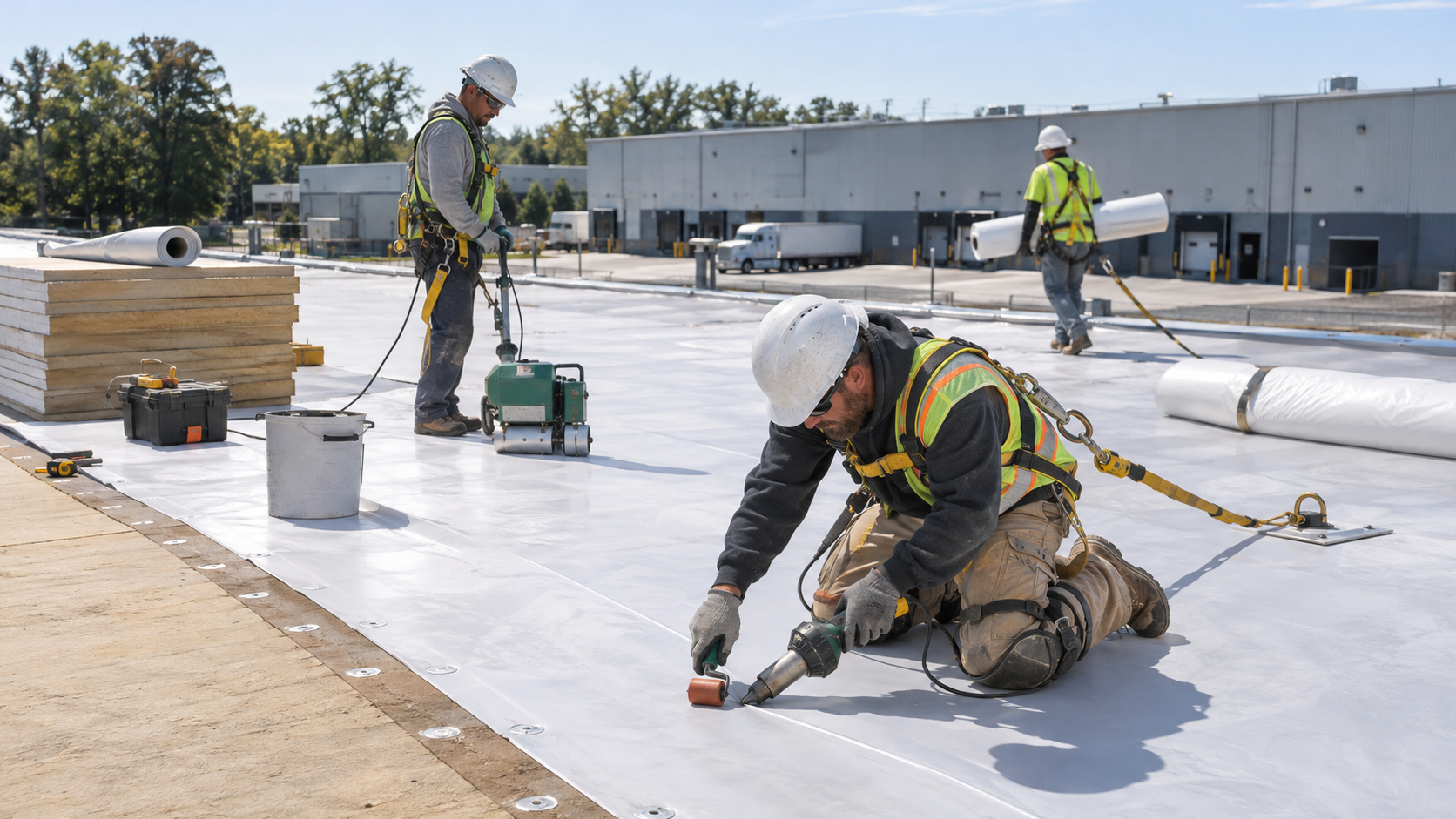
Why Property Managers Choose Abbott & Crane For Roofing Work
Commercial roofing requires coordinated decisions about systems, drainage, rooftop equipment, access, weather, occupied operations, safety, property protection, and cleanup. A structured process helps keep the work aligned with the building’s condition and the approved installation or repair scope.
Commercial Roof Assessment
Commercial roof assessment starts with membrane condition, seams, fasteners, flashing, penetrations, drainage, rooftop equipment, parapets, and interior leak reports. The review distinguishes isolated repair needs from wider system deterioration and documents areas requiring attention. Building use, access, safety, and previous work are also considered. This creates a practical basis for discussing repair, restoration, or installation without relying only on roof age, a single leak location, or assumptions about hidden conditions across the entire commercial property.
Installation Planning
Installation planning coordinates roof measurements, deck type, existing assemblies, insulation values, drainage patterns, material staging, equipment access, and operating hours. These details shape tear-off limits, temporary protection, system selection, fastening, flashing, and daily work zones. Planning before mobilization helps reduce delays and supports orderly progress around tenants, employees, deliveries, and customers. Property managers receive a clearer schedule, defined responsibilities, and advance notice of activities that may affect normal building operations through each scheduled project phase.
Repair Diagnosis
Commercial leaks rarely travel straight down from the exterior opening. Water can move beneath membranes, along insulation, around curbs, or across deck joints before appearing indoors. Repair diagnosis compares interior evidence with seams, punctures, flashing, drains, penetrations, and rooftop equipment. Moisture testing may help narrow the affected area when appropriate. A focused diagnosis prevents random patching and directs labor and materials toward the detail most likely responsible for the reported problem inside the affected building.
Drainage Evaluation
Effective drainage protects low-slope commercial roofs from prolonged standing water and repeated stress. An evaluation reviews roof slope, drains, scuppers, gutters, overflow paths, strainers, and areas where debris or settled insulation slows runoff. The findings help separate cleaning needs from damaged components, restricted outlets, or slope-related concerns. Correcting practical drainage problems can reduce membrane wear, limit water concentration around seams, and improve how the roof responds during heavy Houston rainfall across the full roof area.
Occupied Property Coordination
Roofing work on an occupied commercial property must account for entrances, customer areas, employee routes, deliveries, noise, odors, equipment shutdowns, and secure access. Coordination defines where crews, materials, lifts, and debris containers can operate without blocking essential activity. Daily updates help managers prepare occupants for changing work zones. The project remains focused on safe production while reducing avoidable interference with the building’s normal schedule, tenants, and public-facing operations throughout every active phase of roof work.
Final Quality Review
After repairs or installation, the completed areas are reviewed for membrane attachment, seam continuity, flashing transitions, penetrations, edge metal, drainage components, seal points, and visible workmanship. Rooftop materials, debris, and temporary protection are removed from the active zone. The property representative can review the finished scope, documentation, and applicable care information. This final check confirms that agreed work is complete and identifies any remaining item before the roofing project is formally closed with documented results.
Installation And Repair Services For Commercial Roofs
Explore focused commercial roofing services for TPO, metal, modified bitumen, active leaks, storm damage, flashing, drainage, insulation, coatings, and complete roof replacement.
TPO RoofingTPO Roof Installation
TPO roof installation creates a reflective, heat-welded membrane system for warehouses, retail centers, offices, and other low-slope commercial buildings. Work may include deck preparation, insulation, cover board, membrane placement, mechanical attachment or adhesive, welded seams, flashings, and perimeter details. The system is laid out around rooftop equipment and drainage locations. Careful seam welding and transition work help create a continuous surface designed to manage Houston sun, rain, and changing rooftop temperatures through every operating season.
Call (713) 865-6560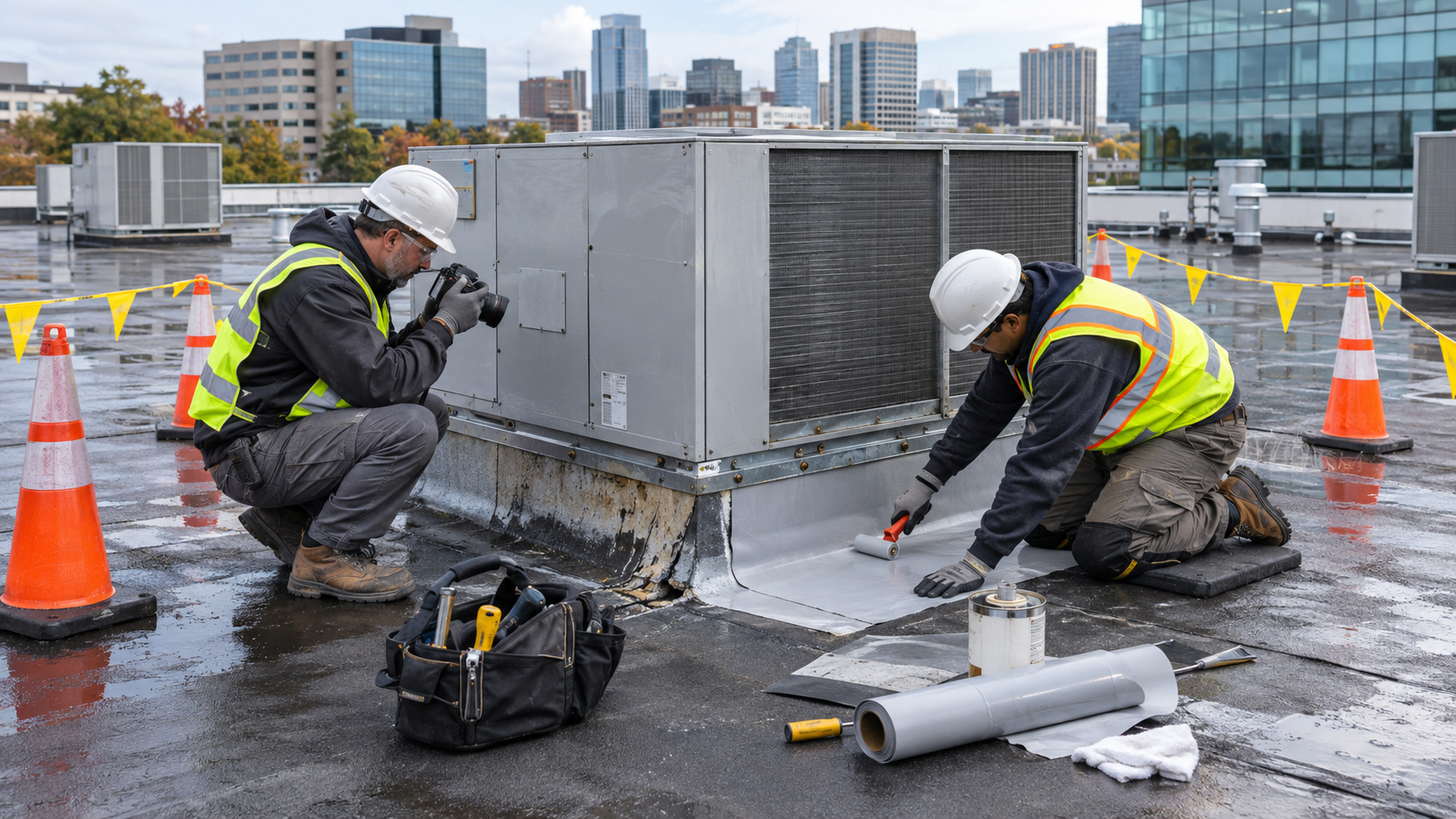 Leak Repairs
Commercial Roof Leak Repair
Commercial roof leak repair begins by connecting interior water evidence with exterior roof conditions. Technicians inspect seams, penetrations, curbs, flashing, drains, punctures, fasteners, and previous patches to locate the likely entry path. Damaged material is prepared and repaired with compatible components suited to the existing system. Prompt work helps limit moisture spread into insulation, decking, ceilings, inventory areas, and occupied spaces while reducing the chance that a small opening becomes a broader problem over time.
Call (713) 865-6560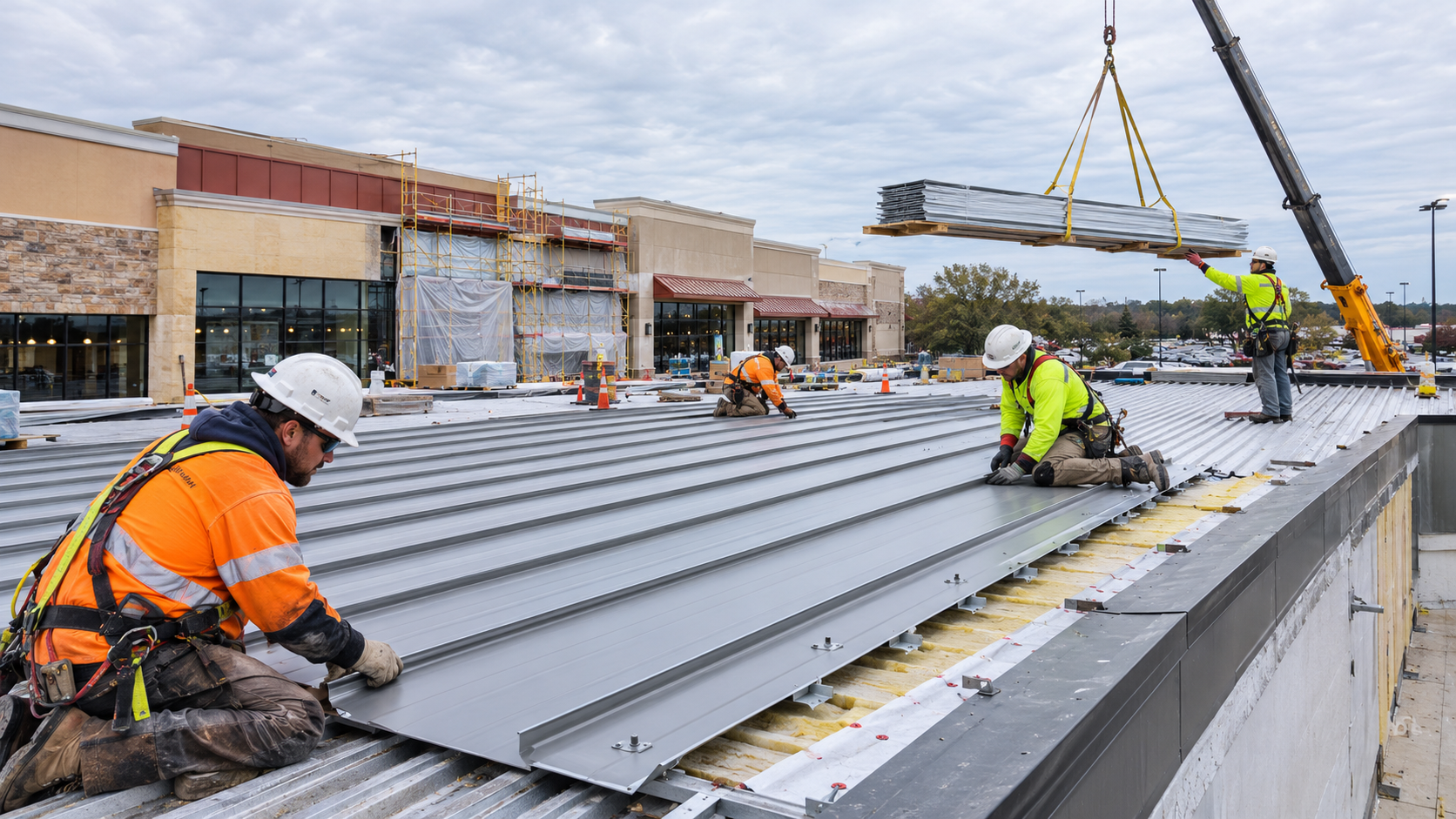 Metal Roofing
 Installation
Commercial metal roofing installation uses formed panels, secure fastening, controlled overlaps, closures, flashing, and edge details to create a durable weather barrier. Panel layout is coordinated with roof dimensions, expansion movement, penetrations, drainage, and the building’s architectural lines. Material delivery and lifting are planned to protect finished panels from distortion. Precise alignment and connection details support consistent appearance, dependable runoff, and long-term performance on retail, industrial, office, and mixed-use properties through changing weather and seasons.
Call (713) 865-6560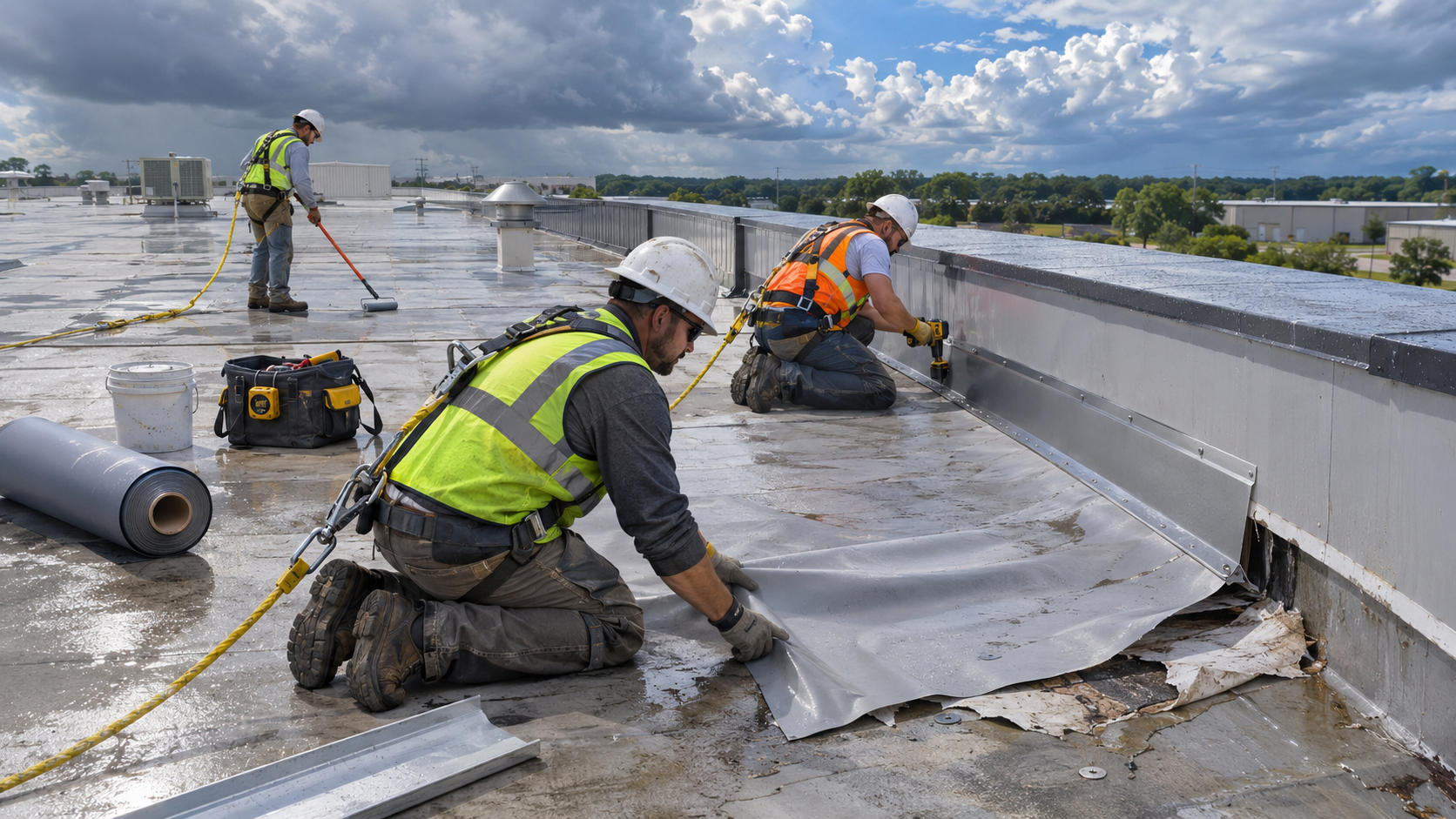 Storm Repairs
Storm Damage Repairs
High winds, hail, heavy rain, and flying debris can damage membranes, seams, flashing, coping, fasteners, panels, drains, and rooftop accessories. A commercial storm inspection documents visible changes and identifies areas with active exposure or water-entry risk. Repairs are prioritized according to severity, building use, and compatibility with the existing roof. Timely action can stabilize vulnerable sections, reduce additional moisture intrusion, and give property managers clear information about the work that should follow without unnecessary delays.
Call (713) 865-6560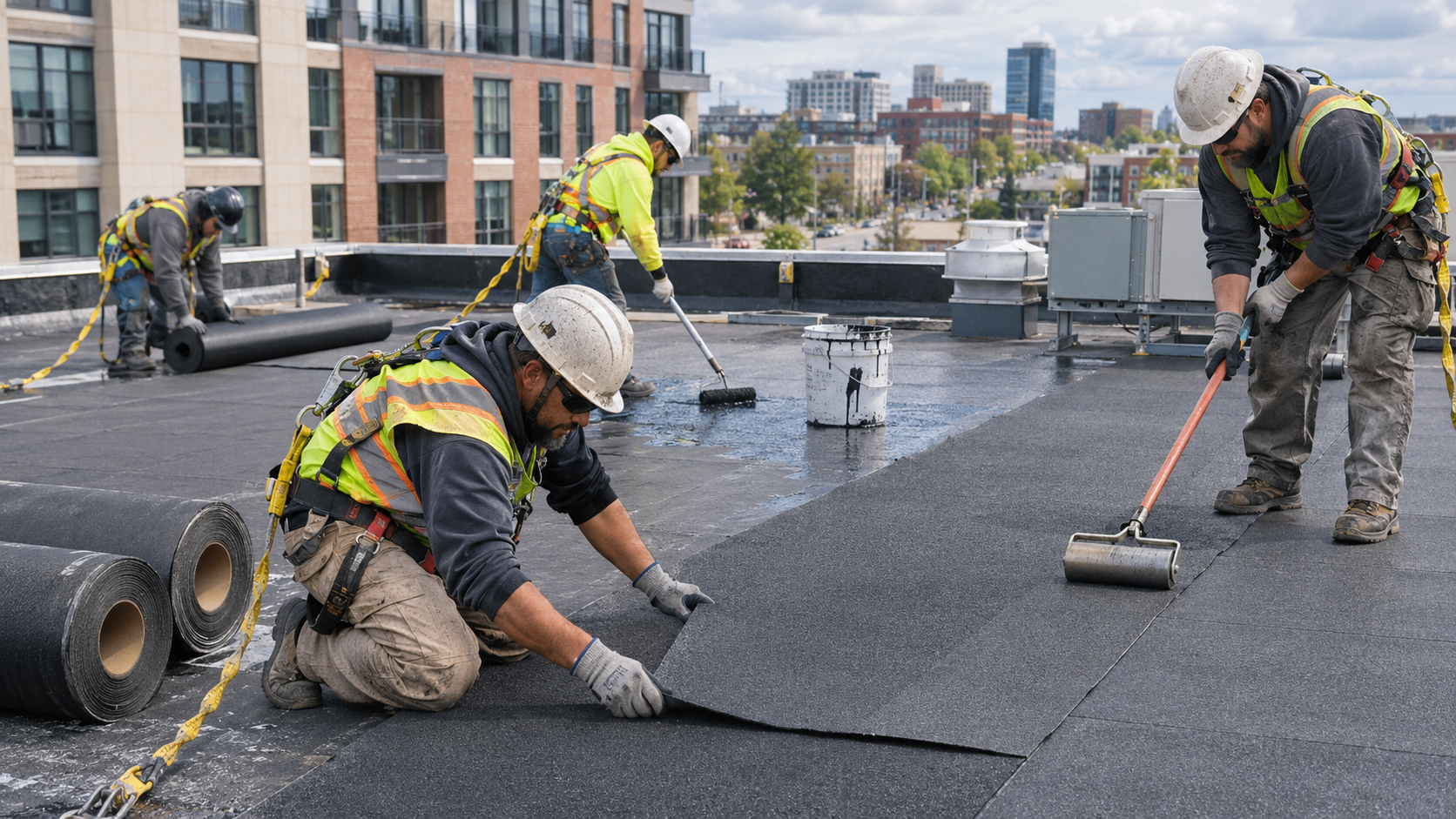 Replacement
Commercial Roof Replacement
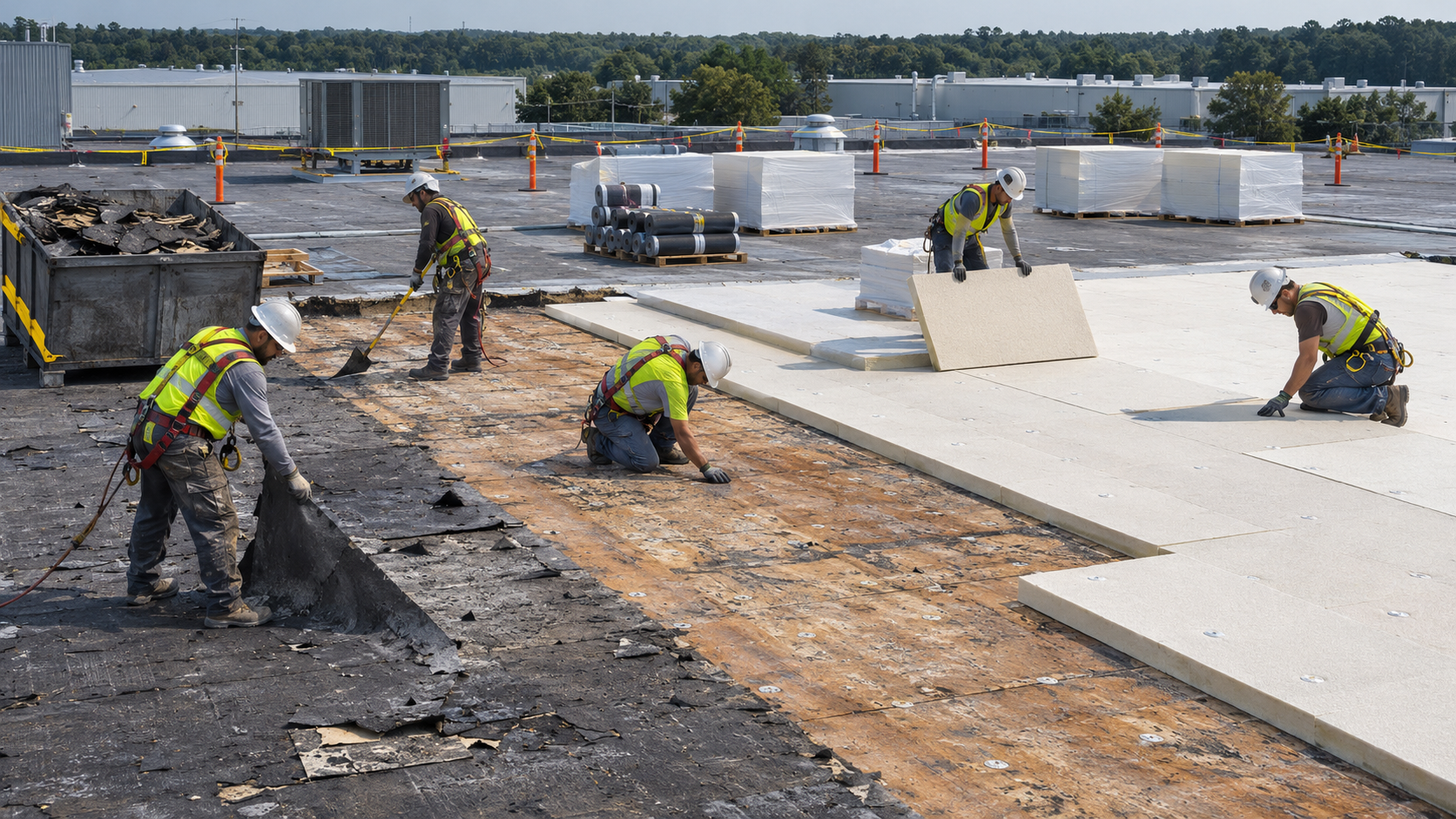
Commercial roof replacement is considered when deterioration is widespread, insulation is wet, repeated leaks affect multiple areas, or continued patching no longer offers dependable value. The project may involve controlled tear-off, deck review, insulation replacement, new drainage details, flashing, and installation of a complete roofing system. Phased planning helps manage access, debris, materials, and weather protection. The finished assembly is coordinated around building use, rooftop equipment, code requirements, and long-term maintenance priorities across the property.
Call (713) 865-6560How Commercial Roof Work Moves From Inspection To Completion
A defined commercial roofing process keeps inspection findings, scope decisions, system selection, access, operating schedules, weather planning, installation or repairs, cleanup, and communication organized from the first visit through final review.
Rooftop Site Evaluation
The process begins with a rooftop evaluation and review of reported interior concerns. Technicians examine the existing system, seams, flashings, penetrations, parapets, edges, drainage, rooftop units, previous repairs, and accessible deck conditions. Building operations and roof access are also discussed because they influence staging and scheduling. The findings establish whether targeted repair, restoration, partial replacement, or full installation deserves consideration and provide a clear starting point for scope development for a properly planned commercial project.
Written Scope And Estimate
Inspection findings are organized into a written scope that identifies affected areas, preparation, materials, repair or installation methods, access requirements, cleanup, and relevant project allowances. A detailed estimate helps property owners compare what is included instead of judging proposals only by total price. Optional work can be separated from immediate needs, and questions can be resolved before scheduling. This step creates shared expectations for responsibilities, sequencing, documentation, and the intended commercial roofing result before mobilization.
System And Material Selection
Commercial roofing materials are selected according to deck type, slope, drainage, rooftop traffic, energy goals, existing assemblies, building use, budget, and expected service demands. Options may include TPO, modified bitumen, metal panels, coatings, insulation, cover boards, and compatible flashing components. Product decisions are reviewed as a complete system rather than isolated materials. Coordinating components early supports accurate ordering, appropriate details, warranty requirements, and consistent installation across the property from the deck through the finished surface.
Work Zone Preparation
Before work begins, crews establish access routes, material staging, lift locations, debris handling, fall protection, and temporary barriers around the active roof zone. Managers receive guidance about parking, deliveries, sensitive interior areas, equipment, alarms, and operating schedules that may be affected. Existing surfaces and adjacent property are protected as required. Organized preparation gives technicians space to work safely and helps repair, tear-off, installation, and cleanup move through planned phases efficiently from mobilization through final demobilization.
Installation Or Repair Work
Crews complete the approved commercial roofing work according to the system, site conditions, and written scope. Tasks may include tear-off, insulation replacement, membrane installation, seam welding, panel fastening, flashing reconstruction, coating application, penetration repairs, edge metal, or drainage corrections. Exposed areas are managed as work progresses so the building remains protected. Supervision focuses on compatible materials, sound details, safe work practices, orderly production, and communication with the property representative from initial setup through daily closeout.
Cleanup And Final Review
At completion, removed roofing, packaging, loose fasteners, unused materials, and temporary protection are cleared from the work zone. Drains, walk paths, access points, staging areas, and surrounding grounds are checked as part of cleanup. The completed roof areas are reviewed against the approved scope, and final questions can be addressed with the property representative. Relevant maintenance, photo documentation, product, and warranty information is then organized before the commercial roofing project is closed for future reference.
Benefits Of Timely Commercial Roofing Work
Stronger Weather Protection
A properly installed or repaired commercial roof helps defend the building against wind-driven rain, intense sun, humidity, hail, and sudden storms. Continuous membranes or panels, secure seams, sound flashing, protected penetrations, and functional drainage work together to move water away from vulnerable areas. Correcting open details before they spread can reduce exposure within the deck and interior. The result is a more dependable exterior barrier suited to Houston’s demanding conditions and the building’s roof design.
Better Water Management
Low-slope commercial roofs depend on clear drains, scuppers, overflow paths, and correctly detailed transitions to remove rainfall. When water remains too long, it can stress membranes, collect debris, worsen small openings, and add weight to affected areas. Drainage repairs and coordinated installation details help direct runoff toward intended outlets. Better water management supports more predictable roof performance, reduces repeated ponding concerns, and makes routine inspections easier after major storms across the commercial property after rainfall.
Reduced Business Disruption
Planned roofing work can reduce avoidable interference with tenants, employees, customers, deliveries, and building equipment. Defined access routes, phased work zones, scheduled material movement, and clear daily communication help managers prepare for noise or temporary restrictions. Repairing developing problems early may also prevent sudden leaks from interrupting operations or damaging occupied areas. A coordinated project keeps roofing activity organized while respecting the practical needs of the business below during every planned stage of the project.
Longer Roof Service Life
Routine inspection, compatible repairs, effective drainage, protected seams, sound flashing, and careful installation can help commercial roofing components perform for their intended service period. Ignoring punctures, loose edges, failed sealant, blocked outlets, or damaged transitions may allow limited defects to affect wider areas. A coordinated maintenance and repair approach protects existing investment. Property managers also gain clearer priorities for budgeting, storm response, documentation, and future replacement planning across the entire roof and its connected details.
Compare Roofing Systems For Your Property
Review common commercial roofing systems according to deck type, slope, drainage, energy goals, maintenance, rooftop activity, building use, and long-term property priorities.
| Commercial System | System Features | Primary Use |
|---|---|---|
| TPO Membrane | Heat-welded seams and reflective surface | Low-slope weather protection |
| Standing-Seam Metal | Formed panels and secure connection details | Durable runoff and architectural finish |
| Modified Bitumen | Reinforced multi-layer sheet system | Flexible protection for active roofs |
| Roof Coating | Fluid-applied reflective restoration layer | Extend serviceability of suitable systems |
Signs A Commercial Roof Needs Professional Attention
Interior Water Stains
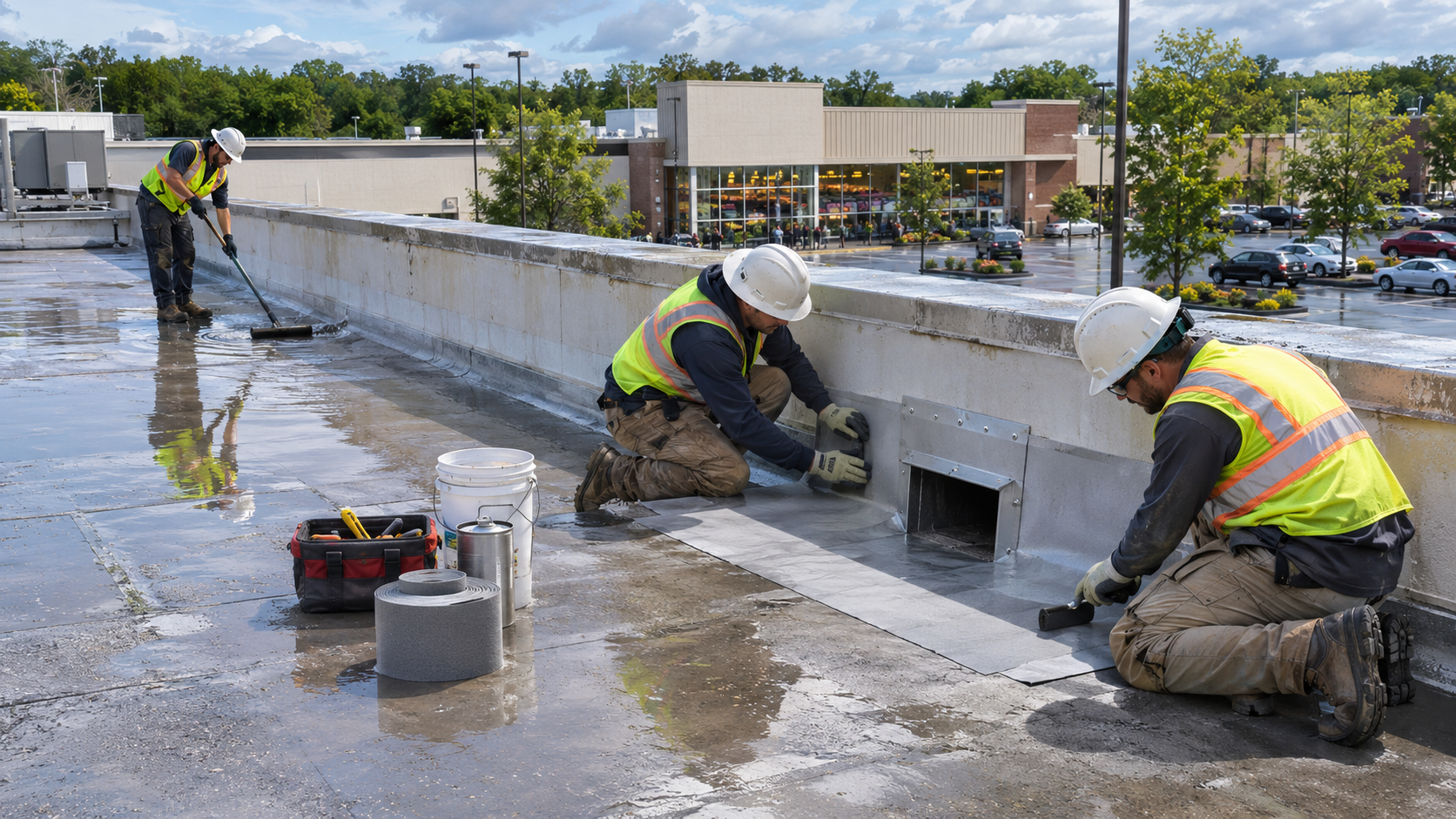
Ceiling stains, wet insulation, dripping near equipment, discolored walls, or damp inventory areas can indicate water entering somewhere above. Because moisture may travel beneath the roof system before appearing indoors, the visible symptom does not always identify the exterior opening. A prompt evaluation compares interior evidence with seams, penetrations, flashing, drains, and rooftop units. Early investigation helps limit repeated wetting and provides a more accurate direction for repair before damage spreads into adjacent occupied areas.
Open Seams Or Punctures
Separated seams, cuts, punctures, blisters, exposed fasteners, and lifted membrane edges can weaken the roof’s ability to resist wind and water. Damage may result from weather, dropped tools, service traffic, equipment work, or ordinary aging. Even when an active leak is not visible, open areas deserve attention before the next storm. Inspection determines the extent of affected material and whether a compatible localized repair can restore continuity before wind or rain enlarges the damaged section.
Damaged Flashing Or Coping
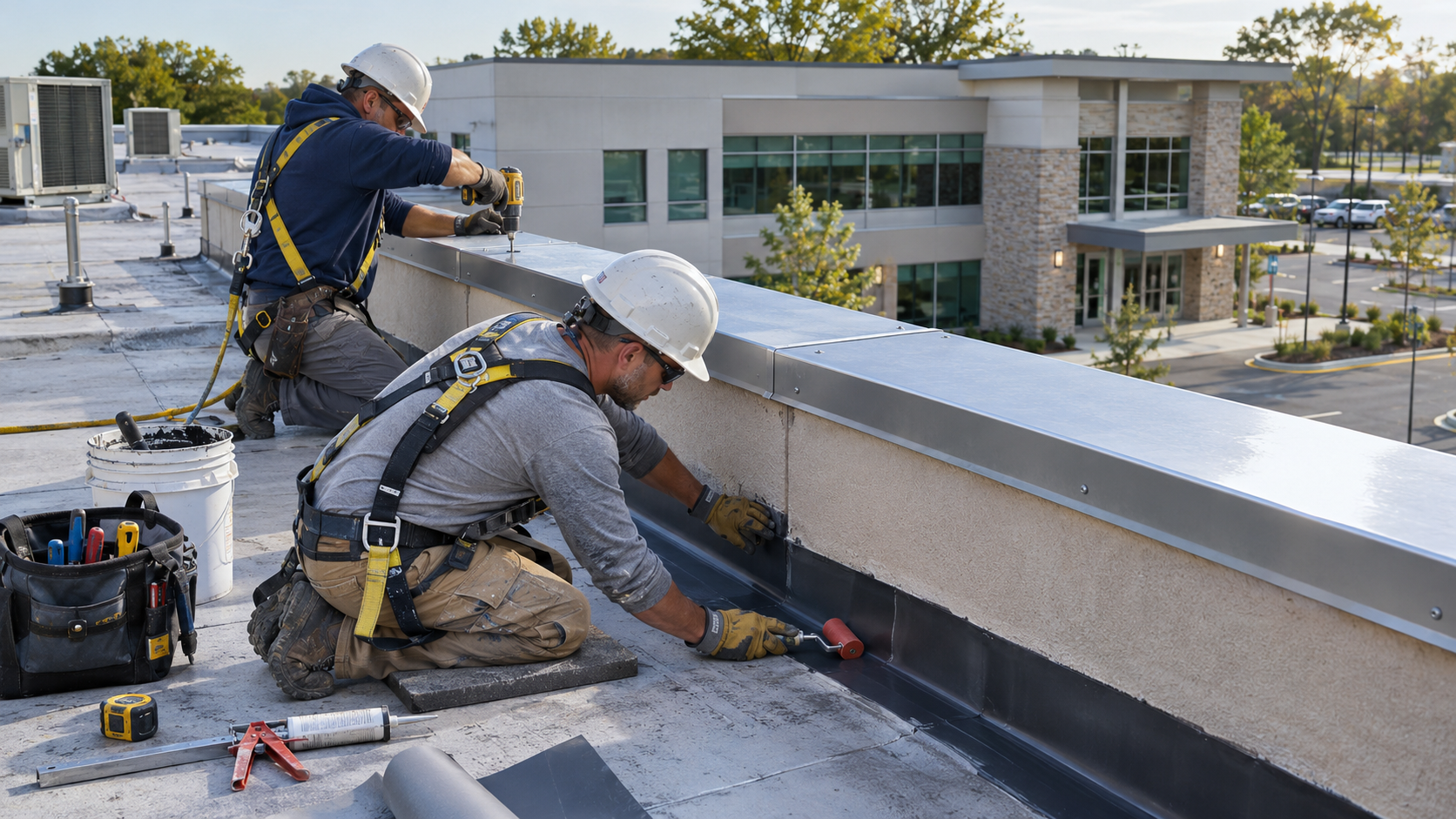
Flashing and coping protect roof transitions at parapets, curbs, walls, penetrations, and perimeter edges where water and wind create concentrated stress. Loose metal, failed sealant, open laps, corrosion, movement, or poor attachment can expose the assembly even when the main field remains intact. Repair may require removing nearby material so the transition can be rebuilt correctly. Sound edge and flashing details reduce recurring leaks and help the roof resist uplift during severe Houston weather events.
Ponding Water After Rain
Water that remains on a commercial roof long after rainfall may point to blocked drains, damaged scuppers, settled insulation, limited slope, or debris restricting flow. Repeated ponding can collect dirt, accelerate surface wear, and concentrate stress around seams or penetrations. An evaluation identifies whether cleaning, component repair, localized correction, or broader drainage planning is appropriate. Addressing practical causes helps the roof dry more consistently and makes developing defects easier to observe across the affected area.
Prepare For Commercial Roof Installation Or Repairs
Practical preparation helps property managers document concerns, compare systems, coordinate access, plan around operations, protect occupied areas, and keep commercial roofing work organized.
Document Active Roof Problems
Before an inspection, record where interior leaks appear, when they occur, which weather conditions trigger them, and whether nearby equipment or roof work was recently completed. Photographs of stains, damaged materials, or affected inventory can help explain the pattern without requiring untrained staff to access the roof. Keep prior repair records, warranties, plans, and invoices available when possible. This context helps technicians focus on the conditions most relevant to the reported problem during the visit.
Plan Access Around Operations
Coordinate roof access with deliveries, tenant schedules, security procedures, loading areas, customer entrances, and any equipment that cannot be interrupted. Identify restricted zones and preferred staging locations before materials arrive. Managers should also share requirements for alarms, interior protection, noise, odors, or after-hours work. Clear operational planning helps crews move safely and reduces last-minute changes that could delay repairs, installation, inspections, or daily cleanup throughout each scheduled stage while the building remains open for business.
Compare Complete Roof Systems
Compare commercial roofing proposals by reviewing the complete assembly, not only the visible surface material. Insulation, cover board, attachment, seams, flashing, edge metal, penetrations, drainage, warranties, and maintenance requirements all influence performance. Ask how each component fits the existing deck, building use, rooftop traffic, energy goals, and local weather. Evaluating systems this way makes it easier to understand differences in scope, durability, installation method, and long-term ownership cost before approving any proposed commercial roof project.
Schedule Preventive Inspections
Do not wait for an active interior leak to learn that roof conditions have changed. Periodic inspections can identify punctures, open seams, loose flashing, failed sealant, blocked drains, coating wear, and storm damage while affected areas are still limited. Inspection frequency should reflect roof age, system type, rooftop traffic, nearby trees, severe weather, and previous repairs. Consistent records also help managers track changes, plan maintenance, and budget for future installation needs through changing building needs.
What Customers Say About Our Roofing Work
Published customer feedback reflects the company’s focus on clear communication, careful roofing workmanship, dependable scheduling, and respectful service throughout each project.
Abbott and Crane Construction completed a roofing project at my home last summer. The crew replaced the roof and completed the work with professional attention and care.
The team provided excellent service and professionalism. They arrived early, communicated clearly, and respected our time throughout the scheduled roofing work.
They did an excellent job. The project was handled professionally, and I would recommend the team to others looking for dependable roofing service.
Confirm that the rating, customer names, and review wording match the reviews on your verified business profile before publishing.
Commercial Roof Installation And Repair Questions
Which Commercial Roofing Systems Can Be Installed?
Commercial installations may use TPO, metal, modified bitumen, coatings, insulation, and compatible flashing components according to the deck, slope, drainage, building use, and approved scope.
Can A Commercial Roof Leak Be Repaired While The Building Is Open?
Many repairs can be coordinated around occupied operations when access, noise, work zones, interior protection, equipment, and safety requirements are planned with the property representative.
When Is Full Commercial Roof Replacement More Practical?
Replacement may be more practical when deterioration is widespread, insulation is wet, several areas leak, or repeated patching no longer provides dependable value.
How Is Ponding Water Addressed On A Flat Roof?
The roof is evaluated for blocked drains, damaged scuppers, settled insulation, limited slope, debris, and other conditions that may restrict intended runoff.
How Long Does Commercial Roof Installation Take?
Timing depends on roof size, system type, tear-off, insulation, equipment, access, operating schedules, weather, and whether work must be completed in phases.
Can Leaks Around Rooftop HVAC Equipment Be Repaired?
Leaks around rooftop equipment may be repairable when the source is identified and compatible curb, flashing, membrane, or penetration details can be restored.
How Soon Should Storm Damage Be Inspected?
Commercial roof damage should be inspected promptly after severe weather when there are leaks, displaced materials, open seams, damaged edge metal, or visible impact concerns.
How Do I Request A Commercial Roofing Estimate?
Call Abbott & Crane Construction at (713) 865-6560 or use the contact link to discuss the property, roof system, visible concerns, access, and requested work.
Plan Commercial Roofing Installation Or Repair With Confidence
Contact Abbott & Crane Construction to discuss your commercial property, existing roof system, visible concerns, access, operating schedule, installation or repair goals, and the next step toward a clear roofing estimate.