
Roofing shingles are one of the most common materials used to protect residential buildings from rain, wind, sunlight, snow, and other weather conditions. They are individual pieces of roofing material installed in overlapping rows across a roof. When properly installed, the overlapping pattern helps direct water down the roof and into the drainage system while creating a protective barrier between the building and the outside environment.
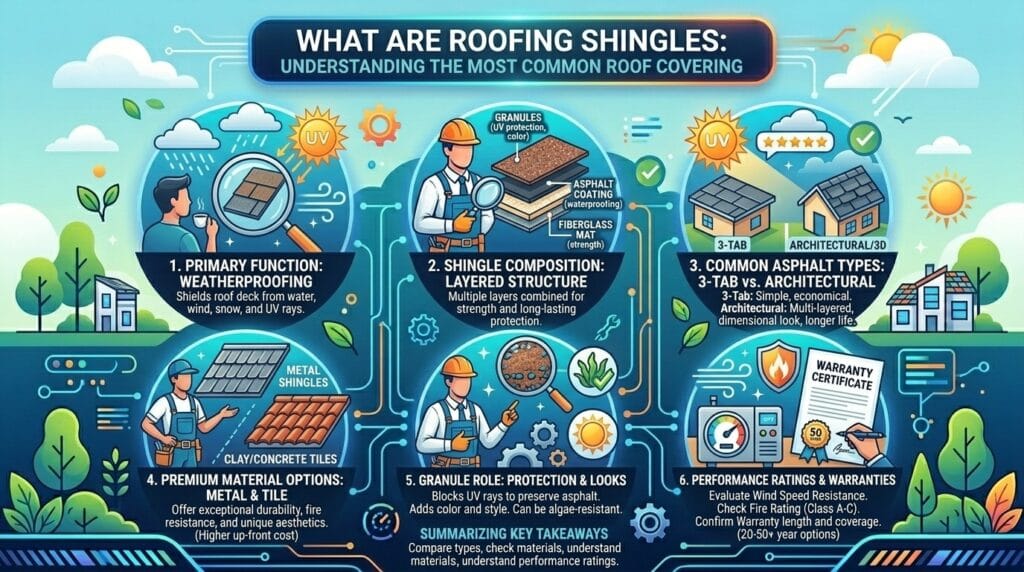
There are several types of roofing shingles available today. Asphalt shingles are the most common, but homeowners can also choose architectural shingles, 3-tab shingles, wood shingles, wood shakes, slate shingles, and composite or synthetic products. Each type has different characteristics in terms of cost, appearance, durability, maintenance, and expected lifespan.
Choosing roofing shingles is an important decision because the roof affects not only the protection of the home but also its appearance, energy performance, maintenance requirements, and long-term ownership costs. Understanding how roofing shingles work and how different types compare can help homeowners select a roofing material that fits their property and budget.
What Are Roofing Shingles?
Roofing shingles are individual pieces of roofing material designed to be installed in overlapping courses on a sloped roof. The overlapping arrangement creates a layered surface that helps shed rainwater and protects the roof structure underneath.
Most shingles are installed starting at the lower edge of the roof and progressing upward toward the ridge. Each successive row overlaps the row below it. This design allows water to flow downward rather than underneath the roofing material.
Roofing shingles are primarily associated with residential roofing, although similar shingle-style products can be used on other structures. Asphalt shingles are particularly popular because they provide a balance of affordability, durability, appearance, and ease of installation.
It is important to understand that shingles are only one component of a complete roofing system. A properly constructed roof also includes the roof deck, underlayment, flashing, ventilation, ridge caps, drip edge, and other components that work together to protect the building.
What Are Roofing Shingles Made Of?
The materials used to manufacture roofing shingles depend on the type of shingle.
Asphalt Shingles
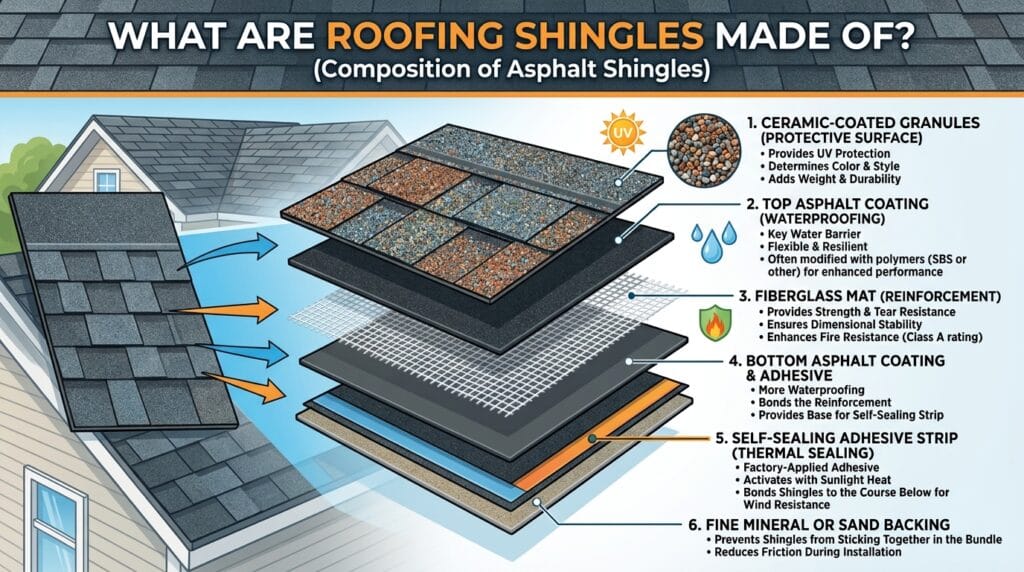
Asphalt shingles generally consist of a fiberglass reinforcement mat covered with asphalt and mineral granules. The fiberglass provides strength, while the asphalt helps create a water-resistant material. Mineral granules are embedded into the exposed surface to provide color and help protect the shingles from ultraviolet radiation and weather exposure.
Architectural shingles may contain additional laminated layers that create their characteristic dimensional appearance.
Wood Shingles
Wood shingles are generally manufactured from naturally durable wood species, with cedar being a common option. They provide a natural appearance but require more maintenance because wood can be affected by moisture, insects, mold, and rot.
Slate Shingles
Slate shingles are cut from natural stone. They are extremely durable and can last for many decades, but they are also heavy and expensive compared with asphalt shingles.
Composite Shingles
Composite or synthetic shingles are manufactured from engineered materials. Some products are designed to replicate the appearance of natural slate or wood while offering reduced weight or maintenance requirements compared with natural materials.
How Do Roofing Shingles Work?
Roofing shingles work primarily by creating an overlapping weather-resistant surface. When rain falls onto the roof, water moves across the exposed surface of the shingles and flows toward the lower edge of the roof.
The overlapping installation prevents water from easily reaching the roof deck. However, shingles rely on other roofing components to provide complete protection.
Underlayment is installed beneath the shingles to provide an additional layer of moisture protection. Flashing protects vulnerable areas where the roof meets walls, chimneys, skylights, valleys, and other penetrations. Gutters then collect and direct water away from the roof and building.
The effectiveness of this system depends heavily on proper installation. Incorrect fastening, damaged flashing, poor drainage, or inadequate ventilation can cause roofing problems even when high-quality shingles are used.
What Are the Different Types of Roofing Shingles?
There are several types of roofing shingles, and each one has different benefits and limitations.
Asphalt Shingles
Asphalt shingles are the most common type of residential roofing shingle. They are popular because they are relatively affordable, widely available, and offered in many colors and styles.
They are typically constructed using a fiberglass mat coated with asphalt and covered with mineral granules. The granules provide color and help protect the material from sunlight.
Asphalt shingles are available in different grades and styles, including three-tab, architectural, and premium or luxury shingles.
3-Tab Shingles
Three-tab shingles are a traditional type of asphalt roofing shingle. They have a relatively flat profile and are manufactured with repeating tabs that create a uniform pattern across the roof.
One of the biggest advantages of three-tab shingles is their relatively low cost. They are also widely available and straightforward to repair or replace.
However, three-tab shingles generally have a shorter expected lifespan and less dimensional appearance than architectural shingles. Many homeowners now choose architectural shingles when they want improved appearance and performance.
Architectural Shingles
Architectural shingles are also called dimensional or laminated shingles. They are constructed with multiple layers of asphalt-based material, which gives them a thicker and more textured appearance.
The dimensional design can make a roof look more sophisticated and can even replicate the appearance of wood shakes or slate.
Architectural shingles generally cost more than three-tab shingles, but they can offer improved durability, appearance, and expected service life. Depending on the specific product, they may also have stronger wind-resistance ratings.
Luxury or Premium Shingles
Luxury shingles are high-end asphalt roofing products designed to provide enhanced aesthetics and performance. Many are manufactured to resemble natural slate, cedar shakes, or other premium roofing materials.
They typically cost more than standard architectural shingles, but they can provide a more distinctive appearance and may have enhanced performance characteristics.
Luxury shingles can be a good option for homeowners who want the appearance of premium roofing without choosing natural stone or other high-cost materials.
Wood Shingles
Wood shingles provide a natural appearance that can complement traditional, rustic, and craftsman-style homes.
Cedar is a common material because of its natural resistance to certain environmental conditions. However, wood roofing requires more maintenance than asphalt shingles.
Moisture, insects, mold, and rot can affect wood shingles if the roof is not properly maintained. Local fire codes and product treatments should also be considered when evaluating wood roofing.
Wood Shakes
Wood shakes are similar to wood shingles but generally have a more textured and rustic appearance. Traditional shakes have historically been split rather than uniformly cut, although modern products can be manufactured using various processes.
Their irregular appearance can create a distinctive roof, but wood shakes generally require more maintenance than asphalt or metal roofing.
Slate Shingles
Slate shingles are made from natural stone and are among the longest-lasting roofing materials available. Properly installed slate roofs can potentially remain functional for many decades.
Slate has a distinctive natural appearance and can significantly enhance the architectural character of a property.
However, slate is heavy and expensive. The building must be able to support the weight, and installation should generally be performed by professionals with experience handling slate roofing.
Composite or Synthetic Shingles
Composite shingles are manufactured from engineered materials and can be designed to replicate the appearance of natural slate, wood shakes, or other roofing products.
They can offer a useful combination of appearance, durability, and lower maintenance. Some synthetic products are also lighter than natural slate.
Because composite roofing products vary significantly between manufacturers, homeowners should review the specific product’s warranty, performance ratings, installation requirements, and expected service life.
Asphalt Shingles vs. Other Roofing Shingles
Different roofing shingles provide different combinations of cost, durability, appearance, and maintenance.
| Shingle Type | Typical Lifespan | Relative Cost | Maintenance | Appearance |
| 3-Tab Asphalt | 15–20 years | Low | Low | Basic |
| Architectural Asphalt | 25–30+ years | Moderate | Low | Dimensional |
| Wood | 20–40 years | Moderate–High | High | Natural |
| Composite | Varies by product | Moderate–High | Low–Moderate | Versatile |
| Slate | 75–100+ years | Very High | Low | Premium |
These figures are general ranges rather than guarantees. Actual performance depends on product quality, installation, climate, ventilation, maintenance, roof pitch, and exposure to severe weather.
What Is the Difference Between 3-Tab and Architectural Shingles?
The main difference between three-tab and architectural shingles is their construction and appearance.
Three-tab shingles are generally flatter and more uniform. Each shingle has visible tabs that create a repeating pattern across the roof.
Architectural shingles are made with laminated layers that create a thicker, dimensional appearance. The additional material can provide greater visual depth and, depending on the product, improved resistance to wind and weather.
Appearance
Architectural shingles generally provide a more textured and premium appearance than three-tab shingles. They are available in many color combinations and can be designed to resemble natural materials.
Three-tab shingles have a simpler appearance and typically offer fewer design options.
Construction
Three-tab shingles use a simpler construction, while architectural shingles use multiple laminated layers.
The additional layers increase the thickness and weight of architectural shingles.
Durability
Architectural shingles are generally considered more durable than basic three-tab shingles, although the exact performance depends on the product and installation.
Lifespan
Three-tab shingles commonly have an expected service life of approximately 15 to 20 years, while architectural shingles can commonly provide approximately 25 to 30 years or more.
Cost
Three-tab shingles generally have a lower upfront cost. Architectural shingles cost more but may provide better long-term value because of their appearance, durability, and longer expected service life.
Wind Resistance
Many architectural shingles are available with higher wind-resistance ratings than basic three-tab shingles. Homeowners in areas with severe storms should review the specific product’s rating and installation requirements.
What Are the Parts of a Shingle Roofing System?
Roofing shingles are only one component of a complete roof.
Roof Deck
The roof deck is the structural surface installed over the roof framing. It is commonly made from plywood or oriented strand board.
Before installing new shingles, the roof deck should be inspected for signs of rot, moisture damage, or deterioration.
Underlayment
Underlayment is installed over the roof deck and beneath the shingles. It provides an additional layer of protection against moisture.
Different roofing systems may use synthetic underlayment, asphalt-saturated felt, or other approved materials.
Ice and Water Shield
Ice and water protection is commonly installed in vulnerable areas such as eaves, valleys, and other locations where additional moisture protection is required or recommended.
Roofing Shingles
The shingles form the visible exterior layer of the roof. Their overlapping installation helps shed water and protect the underlying structure.
Flashing
Flashing is installed around chimneys, skylights, walls, roof valleys, vents, and other areas where water could potentially enter the building.
Ridge Caps
Ridge caps cover the highest points of the roof. They provide weather protection and can be part of a ridge ventilation system.
Roof Ventilation
Roof ventilation helps manage heat and moisture in the attic. A properly balanced system may include intake vents and exhaust vents.
Gutters and Downspouts
Gutters collect water flowing from the roof and direct it away from the building. Proper drainage helps protect the roof edges, siding, foundation, and surrounding property.
How Are Roofing Shingles Installed?
Installing roofing shingles involves several steps, and proper installation is critical to roof performance.
1. Roof Inspection
The project begins with an inspection of the existing roof. The contractor evaluates the shingles, flashing, roof deck, ventilation, drainage, and other components.
2. Remove Existing Roofing
If a complete replacement is required, the old roofing material is removed. This allows the contractor to inspect the underlying roof deck.
3. Inspect the Roof Deck
Damaged or deteriorated decking should be identified and repaired or replaced as appropriate.
4. Install Drip Edge
Drip edge helps direct water away from vulnerable roof edges and protects portions of the roof structure.
5. Install Underlayment
Underlayment is installed over the roof deck to provide additional protection against water intrusion.
6. Install Ice and Water Protection
Where required or appropriate, ice and water protection is installed in vulnerable areas such as eaves and valleys.
7. Install Flashing
Flashing is installed around roof penetrations and intersections to reduce the risk of leaks.
8. Install Roofing Shingles
The shingles are installed in overlapping courses according to manufacturer specifications. Correct nail placement and fastening are essential.
9. Install Ridge Caps
Ridge-cap shingles are installed along the roof ridges to complete the roofing system.
10. Inspect and Clean Up
The completed roof should be inspected for installation problems, and the contractor should clean up roofing debris from the property.
Can You Install New Shingles Over Old Shingles?
In some situations, new shingles may be installed over an existing layer of asphalt shingles. However, this depends on local building codes, manufacturer requirements, the condition of the existing roof, and the number of existing layers.
A complete tear-off can provide advantages because it allows the contractor to inspect the roof deck and identify hidden damage.
If the existing roof has significant moisture damage, multiple layers, severe deterioration, or structural problems, installing another layer may not be appropriate.
A professional inspection should determine whether an overlay or complete tear-off is the better option.
What Are the Benefits of Roofing Shingles?
Affordable
Asphalt shingles are generally less expensive than many premium roofing materials. This makes them accessible to homeowners working within a range of budgets.
Versatile
Roofing shingles are available in many colors, textures, profiles, and styles. This allows homeowners to select a roof that complements the property’s exterior.
Easy to Repair
Localized damage can often be repaired by replacing individual shingles or small sections rather than replacing the entire roof.
Wide Range of Options
Homeowners can choose from basic three-tab shingles, architectural shingles, luxury shingles, wood, composite, slate, and other products.
Good Weather Protection
Properly installed shingles can protect a home from rain, wind, sunlight, snow, and other environmental exposure.
Suitable for Many Home Styles
Shingles can be used on many architectural styles, including ranch homes, colonial homes, craftsman homes, traditional houses, and contemporary properties.
What Are the Disadvantages of Roofing Shingles?
Limited Lifespan
Most asphalt shingles do not last as long as natural slate or some metal and tile roofing systems.
Storm Damage
Severe hail, high winds, falling branches, and other storm events can damage shingles.
Granule Loss
As asphalt shingles age, they can gradually lose mineral granules. Excessive granule loss can indicate significant deterioration.
Algae and Moss
In damp or shaded environments, algae and moss can develop on roofing shingles. They can affect appearance and may contribute to moisture retention.
Maintenance Requirements
Although asphalt shingles are relatively low maintenance, homeowners should still inspect the roof, clean gutters, remove debris, and repair damage when necessary.
Color Matching During Repairs
Older shingles naturally weather over time. Replacement shingles may therefore appear slightly different from the existing roofing material.
How Long Do Roofing Shingles Last?
The lifespan of roofing shingles depends on the material, quality, installation, climate, maintenance, and exposure to severe weather.
Three-tab asphalt shingles commonly last around 15 to 20 years, while architectural shingles can commonly last approximately 25 to 30 years or more.
Wood shingles may last around 20 to 40 years under suitable conditions, while natural slate can potentially last 75 to 100 years or longer.
These numbers are general estimates. A roof exposed to severe weather or poor ventilation may deteriorate much sooner than expected.
How Much Do Roofing Shingles Cost?
Roofing shingle costs vary considerably from one property to another.
The total project cost can depend on:
- Roof size
- Shingle material
- Shingle quality
- Labor
- Geographic location
- Roof pitch
- Roof complexity
- Tear-off requirements
- Underlayment
- Flashing
- Ventilation
- Roof deck repairs
- Disposal costs
Three-tab asphalt shingles generally have a lower initial cost than architectural or premium shingles. Wood, composite, and slate shingles can have substantially different pricing depending on the product and installation requirements.
Rather than relying on a generic roofing price, homeowners should obtain a property-specific inspection and estimate.
How to Choose the Right Roofing Shingles
Choosing roofing shingles requires consideration of several factors.
Consider Your Budget
Your budget should include both installation costs and potential long-term maintenance and replacement expenses.
Consider Your Climate
The local climate can influence which roofing products are most appropriate. Wind, hail, snow, rain, sunlight, and temperature changes can all affect roofing performance.
Consider Expected Lifespan
If you plan to stay in the home for decades, investing in a longer-lasting roofing material may provide better long-term value.
Consider Your Home’s Architecture
The roofing material and color should complement the architectural design of the property.
Consider Maintenance Requirements
Some materials require more maintenance than others. Wood roofing generally requires more attention than asphalt or certain synthetic products.
Consider Wind and Hail Resistance
If severe storms are common in your area, review the product’s wind and impact ratings.
Consider Fire Ratings
Roofing products have different fire classifications. Local building codes and insurance requirements may also influence your choice.
Consider Color and Appearance
Select a color that complements your home’s siding, brick, stone, trim, windows, and doors.
Consider Manufacturer Warranty
Review the warranty carefully and understand its coverage, limitations, and installation requirements.
Consider Contractor Experience
The quality of installation can have a major impact on roofing performance. Choose a qualified contractor who has experience installing the specific roofing product.
What Roofing Shingle Color Is Best?
There is no single best roofing shingle color for every home. The right color depends on the exterior design, surrounding environment, personal preference, and sometimes climate considerations.
Popular colors include black, charcoal, gray, brown, tan, weathered wood, and multi-color blends.
Dark shingles can create contrast against light-colored siding, while brown and weathered-wood colors can complement natural materials such as stone and wood.
Homeowners should consider the entire exterior of the property rather than selecting a roof color independently.
How to Maintain Roofing Shingles
Proper maintenance can help extend the useful life of a shingle roof.
Inspect the Roof Regularly
Look for missing, cracked, curling, or damaged shingles.
Clean Gutters
Clogged gutters can interfere with proper drainage and contribute to water-related problems.
Remove Leaves and Debris
Debris can trap moisture against roofing materials and contribute to deterioration.
Check Flashing
Inspect flashing around chimneys, skylights, valleys, walls, and vents.
Look for Damaged Shingles
Damaged shingles should be repaired or replaced promptly to reduce the risk of water intrusion.
Control Moss and Algae
Moss and algae can affect the appearance of shingles and may retain moisture. Cleaning should be performed using methods appropriate for the specific roofing material.
Aggressive pressure washing can damage asphalt shingles and should generally be avoided unless specifically approved by the roofing material manufacturer.
Maintain Attic Ventilation
Proper attic ventilation helps regulate heat and moisture and supports the overall performance of the roofing system.
Schedule Professional Inspections
Professional inspections can identify problems that may not be visible from ground level.
Signs Your Roofing Shingles Need Repair
Common signs of roofing problems include:
- Missing shingles
- Cracked shingles
- Curling shingles
- Buckled shingles
- Blistering
- Excessive granule loss
- Bald spots
- Exposed nails
- Damaged flashing
- Roof leaks
- Water stains
- Sagging
- Moss or algae
- Storm damage
Addressing problems early can help prevent water from reaching the roof deck and interior portions of the building.
When Should You Replace Roofing Shingles?
Not every roofing problem requires complete replacement.
Repair May Be Appropriate When:
A repair may be sufficient when only a small section of the roof is damaged. Examples include a few missing shingles, localized storm damage, or a flashing problem with a clearly identifiable source.
Replacement May Be Appropriate When:
Replacement may be necessary when the roof is approaching the end of its expected lifespan, deterioration is widespread, leaks are recurring, or significant storm damage has affected large areas.
A professional inspection can help determine whether repairing the existing roof or replacing it entirely is the better long-term solution.
Roofing Shingles vs. Metal Roofing
Roofing shingles and metal roofing both have advantages.
Asphalt shingles generally have a lower upfront cost and offer many styles and colors. They are also relatively straightforward to repair.
Metal roofing typically offers a longer potential lifespan and strong durability but generally has a higher initial cost.
The best option depends on budget, climate, desired appearance, maintenance expectations, and long-term plans.
Roofing Shingles vs. Tile Roofing
Tile roofing is generally heavier and more expensive than asphalt shingles, but it can offer a very long service life.
Tile can also provide a distinctive architectural appearance and is particularly common with certain Mediterranean, Spanish, and Southwestern designs.
Asphalt shingles are generally easier and less expensive to install and repair, making them a practical option for many residential properties.
Roofing Shingles vs. Slate Roofing
Slate roofing is one of the most durable roofing materials available and can potentially last for a century or more.
However, slate is significantly heavier and more expensive than asphalt shingles and requires specialized installation.
Roofing shingles offer a more affordable and accessible option for homeowners who want reliable residential roofing without the structural and financial requirements of natural slate.
Are Roofing Shingles Right for Your Home?
For many homeowners, roofing shingles are an excellent choice because they provide a balance of affordability, appearance, durability, and repairability.
Asphalt shingles are particularly practical for homeowners who want a proven residential roofing material that is widely available and offered in numerous styles.
Architectural shingles can be a good choice for homeowners who want a more premium appearance and improved performance compared with basic three-tab shingles.
However, homeowners with specific priorities may want to consider other materials. Metal may be preferable when longevity and durability are priorities, while tile or slate may be appropriate for certain architectural styles and long-term investments.
Frequently Asked Questions About Roofing Shingles
What are roofing shingles?
Roofing shingles are individual pieces of roofing material installed in overlapping rows to protect a building from rain, wind, sunlight, and other weather conditions.
What are roofing shingles made of?
They can be made from asphalt, fiberglass, wood, natural slate, composite materials, and other products. Asphalt shingles are the most common residential option.
What is the most common type of roofing shingle?
Asphalt shingles are among the most commonly used residential roofing shingles because they are affordable, versatile, and widely available.
How long do roofing shingles last?
Three-tab asphalt shingles commonly last around 15 to 20 years, while architectural shingles can commonly last approximately 25 to 30 years or more. Actual lifespan varies based on product, installation, climate, and maintenance.
Are architectural shingles better than 3-tab shingles?
Architectural shingles generally provide a more dimensional appearance and may offer improved durability and wind resistance compared with basic three-tab shingles. They also generally cost more.
How much do roofing shingles cost?
The cost depends on roof size, shingle type, labor, location, roof complexity, tear-off requirements, underlayment, flashing, ventilation, and potential repairs.
Can you put new shingles over old shingles?
In some situations, local codes and manufacturer requirements may allow new shingles to be installed over an existing layer. However, the condition of the existing roof should be evaluated first.
How often should roofing shingles be replaced?
Replacement depends on the shingle type, age, condition, installation quality, climate, and damage. A roof should be inspected when it shows signs of deterioration or approaches the end of its expected lifespan.
What causes roofing shingles to deteriorate?
Common causes include ultraviolet exposure, high winds, hail, moisture, temperature changes, poor ventilation, improper installation, lack of maintenance, and normal aging.
Can roofing shingles withstand high winds?
Many shingles are designed to withstand significant wind speeds, but resistance varies by product. Proper fastening and installation are essential.
Can hail damage roofing shingles?
Yes. Hail can crack, bruise, or remove granules from asphalt shingles. Impact-resistant products may provide improved protection, depending on the specific product.
How do you maintain roofing shingles?
Regular maintenance includes inspecting the roof, cleaning gutters, removing debris, checking flashing, maintaining ventilation, and repairing damaged shingles promptly.
Can damaged roofing shingles be repaired?
Yes. Localized damage can often be repaired by replacing individual shingles or repairing associated components such as flashing.
What color roofing shingles are best?
The best color depends on the home’s exterior, architectural style, surrounding environment, and homeowner preference. Popular options include black, charcoal, gray, brown, and weathered wood.
Are roofing shingles waterproof?
Roofing shingles are designed to resist water and shed rain, but they are part of a larger roofing system. Underlayment, flashing, proper installation, and drainage are also necessary for effective water protection.
What is the difference between roofing shingles and tiles?
Shingles are typically thinner, overlapping pieces commonly made from asphalt, wood, composite materials, or slate. Roofing tiles are generally thicker and may be made from clay, concrete, or other materials. Tiles are often heavier and have different structural and installation requirements.
Final Thoughts
Roofing shingles are a practical and versatile roofing material used on millions of residential properties. They protect the building from weather while also contributing to its appearance and overall value.
Homeowners can choose from several types, including 3-tab asphalt shingles, architectural shingles, luxury shingles, wood shingles, wood shakes, slate shingles, and composite roofing products. Each option has different advantages, costs, maintenance requirements, and expected lifespans.
For many homeowners, asphalt and architectural shingles provide an excellent balance of affordability, durability, appearance, and ease of repair. However, the best roofing material depends on the property’s structure, local climate, budget, desired appearance, and long-term plans.
If you are considering roof repair or replacement, a professional roofing inspection can help determine the condition of your existing roof and identify the most appropriate roofing shingle option for your property.
Our Construction & Remodeling Services in Houston, TX
Looking for professional construction, roofing, or remodeling services in Houston, Texas? Abbott & Crane provides a range of residential and commercial services designed to improve, protect, and add value to your property.
- Commercial Roofing Services – Professional roofing solutions for commercial properties throughout Houston.
- Home Remodeling & Additions – Expand and improve your Houston home with professional remodeling and addition services.
- Siding Replacement & Installation – Upgrade your home’s exterior with durable siding installation and replacement.
- New Construction – Complete construction solutions for new residential and commercial projects.
- Kitchen Remodeling – Create a more functional and attractive kitchen with professional remodeling services.
- Window Installation & Replacement – Improve your home’s comfort, appearance, and energy efficiency with new windows.
- Interior Remodeling – Transform interior spaces with customized remodeling solutions.
- Bathroom Remodeling – Upgrade your bathroom with professional design and remodeling services.